Versatile Consulting

ver·sa·tile [ vúrssət’l ]

1. with many uses: able or meant to be used in many different ways

2. moving easily between tasks: able to move easily from one subject, task, or skill to another

Versatility in consulting does not connote breadth of skills versus depth of skills. It talks about the ability to leverage the skills you have in many different ways.

For example lets look at actor Michael Crawford.  Watch this video as he plays Frank Spencer in the BritCom “Some Mothers do ‘ave ‘em”

Some Mothers do ‘ave ’em  video clip

some2 

“Each episode saw the well-meaning and optimistic, but naïve, clueless, accident-prone tank top and beret-wearing character, Frank Spencer (Michael Crawford), and his very tolerant but often frustrated wife, Betty (Michele Dotrice), getting into situations that usually spiraled ridiculously out of control, frequently resulting in someone else’s nervous breakdown or some unlikely destructive catastrophe. … Episodes usually included stunt work performed by Crawford himself…“

Now let’s take another look at Michael Crawford. Perhaps best known as… The Phantom.. from the original Andrew Lloyd Webber production of the Phantom of the Opera…

Phantom Gala Video

bio1

Or for his Vegas Show…

bio4

Versatility. It is apparent from the above that Michael Crawford can apply his skills in many different areas illustrating versatility.

Now let’s apply the same connotation to consulting. What are your skills? Let’s borrow Microsoft’s definition of a consultant from a standard “consultant” job posting.

  1. architect solutions by mapping common customer business problems to reusable services focused on operational effectiveness and business value.
  2. manage the complete lifecycle of large and complex projects.
  3. helps customer account teams identify, pursue, and close strategic business development opportunities while continually driving add-on business within existing projects.
  4. help translate business requirements into technology requirements for inclusion in contracts and/or statements of work (SOW), and assist in contract negotiations
  5. will work with Microsoft’s partners and Services colleagues
  6. leveraging available IP and following defined delivery methodologies and service offerings.
  7. capture of requirements.
  8. design and development of an integrated solution using the latest Microsoft products and technologies
  9. understanding the relevant application development, infrastructure and operations implications of the designed/developed solution
  10. developing partners as part of the overall Microsoft services delivery model.
  11. act as subject matter expert,
  12. assisting service line management in the definition and development of service and/or solution offerings and intellectual property.
  13. strong skills in focused Solution Delivery practices and IT Consulting.
  14. solution design,
  15. project envisioning,
  16. project planning,
  17. development and deployment.
  18. vertical business process knowledge
  19. project leadership skills
  20. understanding of markets, customers and related technology;
  21. technical leadership
  22. effectiveness in consulting and client management.
  23. deep understanding of customer IT environment,
  24. skills architecting and deploying technology in area(s) of specialization to solve business problems.
  25. industry leading depth knowledge of subject area,
  26. demonstrated analysis and communication skills connecting technology and business problems.

Pre-Sales consultant –  if you apply skills 1,3, 7,11,15 and 16, you can respond to “requests for proposals” (RFP), where you are bidding on services to be provided.

Development consultants (Hands on) – if you apply skills 6,8,9,13,17 you can provide “build/test/deploy” services to your client.

Team Lead – if you apply skills 2,5, 13, 16, 19, 21, 22 and 26 you may lead a customer team through a project.

Architect – if you apply 1,4,6,8, 9,15,16, 18, 20, 24 and 26 you can provide architecture guidance to the project

Subject Matter Expert – if you apply skills 11, 22, 23 and 25 , you can provide specific advisory services to the client.

Evangelist – if you apply skills 1,3,5,8,10, 14,15, 18, 23,24, 25 and 26 you can be on the leading edge of moving customers to new technologies in your area.

Versatility does not mean that you need to program in ASP .NET and Java. It means that as an ASP .NET consultant that you leverage your range of skills in your area of expertise in a versatile manner. Your highest value is where your expertise is deepest and when you can apply those skills in multiple roles.

Posted in Consulting Excellence | 2 Comments

Sheepish Story…


sheep1

There was a shepherd looking after his sheep on the side of a deserted road. Suddenly a brand new Audi screeches to a halt. The driver, a man dressed in an Armani suit, Cerutti shoes, Ray-Ban sunglasses, TAG-Heuer wrist-watch  and a Pierre Cardin tie, gets out and asks the shepherd: "If I  can tell you how many sheep you have, will you give me one of  them?"
 
The shepherd looks at the young man, and then looks at the large flock of grazing sheep and replies: "Okay."
 
The young man parks the car, connects his laptop to the 3G network uploads the exact location data using his GPS, downloads live images from a NASA weather satellite,  opens a database and Excel tables filled with data mining algorithms and pivot tables, then prints out  a  report on his high-tech mini-printer. He turns to  the shepherd and says, "You have exactly 1,586 sheep here."
 
The shepherd cheers, "That’s correct, you can have your sheep."   The young man makes his pick and puts it in the passenger seat of his Audi.
 
The shepherd looks at him and asks: "If I guess your  profession, will you return my animal to me?"
 
The young man answers, "Yes, why not?"
 
The shepherd says, "You are an IT consultant."

"How did you know?" asks the young man shocked.
 
"Very simple," answers the shepherd. "First, you came here without being asked by me. Second, you charged me a fee to tell me something I already knew, and third, you don’t understand anything about my business… Now can I have my dog back?"

If we are not careful, it can happen all too easily.

You came here without being asked.

Well not really, we are always asked but the first person we meet day one may or may not have had our purpose, intent , expected outcomes communicated to them or communicated clearly enough. Often another person may be our client but our area of work may be somewhere different. (ie. Hired by the CIO but engaged to work with the Manager of Architecture). It’s a simple enough problem to avoid. Day 1 ensure that you always, always:

  • communicate who you are
  • why you are there
  • get appropriate permissions from them for the area of engagement
  • discuss the expected outcomes
  • discuss the roles and expected participation of the team you are working with
  • engage the sponsoring client to set the internal expectations and expected role.

You are telling me something I already know.

In some cases as consultants we are contracted to provide a second opinion and may very well be producing an analysis that corroborates the knowledge and findings of the internal team. The critical factor in engagements of that nature is to acknowledge it. Make sure that the internal team knows that you are respecting their findings and note it in your communication. I recently engaged with a major client where the client’s team was stellar. In most areas being investigated they had already thoroughly analyzed and put in place world-class best practices or had them in the plans. What I then did with the engagement was acknowledge that fact and broaden the engagement into other areas that were not as deeply covered. I made certain that the local team was acknowledged for their fine work and got their support in the other areas of investigation.

In cases where the client may think they know the answer, but actually do not, it requires more finesse on the part of the consultant. Our job in that case is to reframe and influence their thinking to a new viewpoint but also to not embarrass them or directly denigrate their position. Check out my blogs on Mastering the Art of Influence for some tips and techniques.

You don’t understand anything about my business.

This is a common and realistic complaint from clients. Too often the IT consultant brings technical skills only and has not done enough research to develop knowledge in the client’s domain. The excellent consultant will not only have technical expertise, but they will understand the client’s domain as well. Are you going to work in Healthcare? You need to understand privacy and security for Healthcare. Technical skills alone are not enough. Most decisions are more subtle than between a dog and a sheep but you don’t want to hear…

Can I have my dog back?

border-collie-front-seat

Posted in Consulting Excellence | 1 Comment

Implementation and Leading The Change

dog

During implementation the project becomes visible for the first time to people beyond the immediate project team. Your client becomes more vulnerable to criticism from others. Clients usually start to feel exposed and uncomfortable at this stage. You may find their behavior unpredictable as the stress increases. They may be inclined to backtrack or go lighter on previous decisions. When a choice exists they will often prefer to take the safe rather than the correct option.

This stage is a major determinant of client satisfaction. The client is feeling vulnerable. Your job is to keep things cool, stay ahead on the time, the budget and keep the project moving forward.

The advantages of smooth implementation are quite simply:

  • The payoff for all the previous work
  • Survival for you and your client
  • Reputation building

How Can You Ensure a Smooth(er) Implementation?

First: Do not assume everything will go smoothly because it will not! Plan ahead, think about what could go wrong and have contingency plans and resources in place.

Second: Communicate, Communicate, Communicate! If you don’t communicate, people will fear the worst.

Third: Build and Execute an Adoption Strategy

  • Define the change in question
  • Determine the implications
  • Make certain you have found every end user
  • Determine what aspects of their jobs will change and at which stage of implementation.
  • Determine the most important improvements your client  is looking to achieve
  • Target training initiatives to focus on these areas
  • Start awareness communication early and increase the tempo nearing implementation.
  • Be straightforward in communication, don’t “candy-coat” the issues that will be faced.
  • Generate Interest early and find some champions. (ie. Brown-bag lunch sessions of early releases)
  • Answer “what’s in it for me?” for people directly affected
  • Answer “what will this do for me and to me?”
  • Shape  positive attitudes
    • What are the features that people will like
    • Early Success stories
    • Benefit Management
    • Provide Trials and Demonstration opportunities
  • Detailed intensive training, help and closed-loop feedback (be sure to acknowledge and respond to feedback) are critical.
  • Business Integration Tests
  • Establish new routines to embed the change into everyday practice
    • change

      • Be Realistic about the rate of adoption and the client’s organizational ability to absorb the change. 

      Change is inevitable during implementation and with change there will be resistance. The key advice is to be proactive about it and therefore minimizing its impact on your project. You will spend less effort and time if you manage adoption proactively instead of managing resistance reactively.

      Posted in Consulting Excellence | 1 Comment

      Infinite Shades of Grey – Advanced Consulting …Almost There

      There are many reasons to write a book such as “Infinite Shades of Grey”; personal gain, notoriety, debunking other “Get Rich Quick” books but alas it is more simple than any of these. Seeing bad consulting drives me nuts! So this book is intended to accomplish the following two objectives:

      • to make good consultants excellent and help them quickly achieve the best possible success in their field and
      • to make bad consultants realize the folly of pursuing their fictional careers and to find honest work elsewhere.

      igrey

      However, I suspect I can only realistically accomplish one of the two objectives, as a bad consultant would never purchase my book anyway.  The scenarios used in the book are real. In places you will wonder, “Could that be true?” but it is.  I will illustrate examples of consulting excellence contributed by myself and many other venerated professional IT consultants and I will coach readers through the steps to acquire and apply the techniques used. The book is a compendium of the best ideas shared by professional consultants who have both “been-there-done-that” and  have reaped the rewards of doing it very well. All of the contributors have each made millions in consulting through demonstrated excellence. On the other hand, I will either amuse or horrify readers with stories of consulting frauds and incompetents and hopefully enable them to spot the tell-tale signs of a con and bad behavior.

      Incorrigible Igor

      The client was an IT outsourcer. They provided specialty applications to the insurance industry internationally. The nature of business, serving hundreds of different companies globally created a very complex infrastructure to connect with them. Few individuals had both the depth and breadth of knowledge to fully understand this environment but Igor did. Igor was a hard core technologist, undoubtedly one of the most highly skilled in the country. He understood every gateway, interface and protocol to the lowest level, each configuration requirement and every software requirement for each piece of infrastructure. In short, he was technically brilliant and one of the few people that could assist this client with all of their challenges maintaining and enhancing this environment. So after eagerly engaging Igor to assist them for a few days, the client promptly fired him.

      On Igor’s first day he met with the client and asked for the documentation on the current configuration and a joint meeting. Igor reviewed the documentation and stated in the meeting “Well I see your challenge. It appears that this configuration was put together by school children from a Kindergarten class. Although I am not sure how many graduated into Grade 1…”

      • Question for the reader? How many of the seven client personnel in the room participated in the design of the original configuration?
      • Answer: Six of them and the seventh person was their new boss.

      Clients hire IT consultants for their technical skills right? Yes, but technical skills are only a part of the equation. What you know and what you can do are important, but how you do it is even more important than both of those. If your client doesn’t enjoy working with you, your value diminishes. If they hate working with you, you are finished before you really start. Some project leads are savvy enough to recognize deficiencies  in team member’s soft skills and put them in a locked room and slide Pizza’s under the door to keep them fed and away from the client, but you can’t count on this method to always be practiced or effective.

      Throughout the book I will introduce you to a cast of real-life consulting characters, some excellent  and some bad. (Buzzword Bianca, Hedgehog Harry, Surfer Sue and yes more from Incorrigible Igor) The scenarios gleaned from thousands of consulting engagements are all true but the names have been changed to protect both the innocent and unfortunately, the guilty.

      Watch for it!

      Infinite Shades of Grey: Advanced Consulting

      Proposes a paradigm for consulting based on the understanding that the client’s problem, the process used and the potential solution should never be defined in black nor white but in infinite shades of grey. Grey removes the safety of absolutes, challenges you to be better at your chosen craft and enables you  to make much better solutions for your clients.

      Creating solutions that are not ordinary but extraordinary.

      Having clients that are not just satisfied, but thrilled to work with you again and again.

      The book equips you to deal effectively with the “grey” in consulting with a set of advanced consulting skills and techniques to augment your technical skill. These techniques have been thoroughly tested and proven to work from small engagements to mega-projects.

      Ultimately, Infinite Shades of Grey is about creating great successes for your clients which in turn will mean great success for you as you strive for consulting excellence.


      backisog

      Posted in Consulting Excellence | Leave a comment

      So you are an Associate Consultant and want to be a Partner?

      Most consulting organizations use a pyramid organization structure. Lots of consultants, fewer Principals and very few Partners and even fewer Managing Partners.

      climb-ladder

      With a few exceptions, people tend to make Partner because they have earned it and proven their abilities.  Unless you are in a massive consulting organization, most Partner roles will require:

      • excellence in skills in their area of knowledge
      • business acumen
      • business development acumen
      • the ability to drive a profitable business
      • excellent client relationship knowledge
      • notable and acknowledged leadership qualities and
      • rapport with the other Partners
      • a portfolio of client relationships that represent incremental value to the partnership

      not just technical knowledge. Whether you are a lawyer, an accountant or an IT consultant, the path the Partnership is quite similar. You are expected to have as an associate consultant:

      • high billability
      • excellent customer satisfaction
      • excellent work and deliverables
      • flexibility (the ability for the firm to use your skills for the highest leverage work, when they need it, where they need it)
      • positive attitude to the client and to the firm
      • visibility to the Partner and other management
      • good profitability (ie. what you are billed out as versus what you are paid)

      When you look at the attrition rate of most large scale IT consulting firms there are two points in the pyramid with very high attrition:

      • Associate Consultant turn-over tends to be very high and the demands placed on the individual in terms of time, work-life balance and expectations of excellence can conflict with personal life goals and choices. ie. If you think you can join a firm as an associate consultant, work for 5 years, not put in overtime and become a Partner, you have an excellent imagination but no hope of Partnership.
      • Associate Partner attrition is the other place in the pyramid where despite  years of ambition and excellence  they are challenged yet again to prove that they have the remaining qualities of a Partner, generally focused around the ability to bring in new business or extend existing business opportunities. Most people in this role fail to achieve the end-goal and leave for management roles elsewhere.

      Do you want to be a Partner?

      A Partner in a large firm can make excellent money.  Let’s do the math.  Assume your partnership agreement allows you 20% of the Gross Margin for your practice and 80% comes to the firm both to pay the non-labor bills. If you sell a $100M project it may execute over 4 years with the following annual profile.

        Cost Utilization Hr Bill rate 1 YR Bill All Bill All Cost Margin
      1 Partner $700,000 20% $500 $200,000 $200,000 $700,000 ($500,000)
      1 Associate Partners $200,000 20% $350 $140,000 $140,000 $200,000 ($60,000)
      2 Senior Managers $175,000 40% $300 $240,000 $480,000 $350,000 $130,000
      3 Managing Consultants $150,000 60% $300 $360,000 $1,080,000 $450,000 $630,000
      5 Senior consultants $125,000 70% $275 $385,000 $1,925,000 $625,000 $1,300,000
      12 consultants $100,000 70% $225 $315,000 $3,780,000 $1,200,000 $2,580,000
      50 associate consultants $75,000 80% $200 $320,000 $16,000,000 $3,750,000 $12,250,000
      Total $16,330,000
      Firm $13,064,000
      Partner $3,266,000
      15% of Base Team Bonus Pool $1,091,250
      Team Development $ 148,000
        Partner Take Home $2,726,750

      cat-bag

      You also have to remember that if you don’t have that project, the cost of warming the bench comes out of the Partner’s pocket also.

      5 months without a project the Partner take-home amount goes to Zero.

      As long at the practice is rocking, yes there is very good money in being a Partner.

      How long will it take?

      There are no hard and fast rules but I think you could assume the following as a minimum.

        • Associate to Consultant –  18 month to 2 years given excellent on-project work                             
        • Consultant to Senior – 1 Major project 1-2  years where the consultant has distinguished themselves.
        • Senior to Managing – 2  major projects where the Senior has been in progressively Senior roles
        • Managing to Senior Manager – 4-6 Major Projects
        • Associate Partner – 4-6 major but has done successful business development with a win track record
        • Associate Partner to Partner – 2-3 years to demonstrate keen and sustained  business development and client management expertise, at least 1 major “additional growth”  win (ie if you are not growing… you don’t need another partner)
        • Total estimated time – 10 years.

      How to be a Partner

      The first thing to remember is that as an Associate Consultant you are unique and special, just like everybody else. So you do need to differentiate yourself.  Technical excellence is expected of you in your role, so becoming acknowledged for it is the differentiating factor.

      • Be active in your technical community internally and externally
      • Get published (few things make an easier sale to a client than putting a copy of your book or technical journal article on their desk)
      • Make certain you understand the industry trends in your area and are briefed on all common and niche technologies in your area

      Hey, but I am a world-class BizTalk developer, why should I need to know about TIBCO?

      My answer is you don’t, as long as you would like to remain a world-class BizTalk developer and don’t want to go further. You are more valuable to your client when you are expert in your technical domain as well as a technical skill area. You are more valuable to your practice when you can provide informed advice to the client that will guide them to investing more deeply and confidently with your practice.

      Make investments in your future…

      Some projects are technically appealing, they use state-of-the-art tools and may in fact have other colleagues you have worked with before. It will be familiar, fun and perhaps even a “sure-thing” for delivery and customer satisfaction. Perfect right?

      Likely not for the partner track.  In order to make it to the top, there are many other skill areas you will need to develop:

    • business acumen
    • business development acumen
    • the ability to drive a profitable business
    • excellent client relationship knowledge
    • leadership qualities and
    • rapport

      To develop, by definition, you must put yourself in new domains, new project areas, new roles with new challenges. You develop business acumen by being in different domains and being exposed to what each customer values. Do you understand supply chain, process manufacturing, discrete manufacturing, retail, distribution, financial services, capital markets,  transportation, public sector, healthcare etc? I am not suggesting that as a Partner you will have this breadth of expertise, it is likely you will focus, but as a associate consultant/consultant broadly educating yourself is of value. Now did I just give the opposite advice I gave in my blog Being in Demand… How to make it happen ? Yes I did.  That blog references how to maximize your value as a consultant, ensure you are in demand and ensure you command the highest rate.  This is completely different. This is about making investments in your career to develop into the person that could be a Partner.

      • You must look for and accept roles in projects that put you in progressively more client-facing activities and progressively senior levels of client interaction.
      • You must look for and accept roles in projects that allow you to learn about team leadership, refine your skill and become excellent at it.
      • Take every opportunity to advance your client management, consulting and leadership skills.
      • Maintain constant vigilance on your value to the client and to your practice. If you ever find yourself in a low-value role either convert it to a high-value role or get out of it immediately.

      Making Principal/Partner

      I spent a decade+ of my career with Unisys, a major Global Systems Integrator. With leadership from McKinsey, Anderson/Accenture and Deloitte they fashioned the $2B consulting services organization into a Partner-led practice model over the years. Larry Weinbach, the CEO at the time,  was previously Managing Partner-Chief Executive of Andersen Worldwide, so you can determine from that, the organization style that was advocated. In the early part of of Larry’s tenure as CEO, Unisys had one of the top-performing stocks in the S&P index and consulting services was its fastest growing and most profitable business by far. A later CxO senior management team, by doing everything opposite to what I have proposed in my entire blog, then decimated the business. But that’s another story…

      (not that I’m bitter at all.. having thousands of $30-$40 stock options that after a 10:1 reverse split recently now have an effective value of $400 against a current trade value of $37 aka completely valueless)

      When I joined Unisys it was in a hard-core technology capacity as a software development consultant. In the early years I participated or led teams that implemented a number of leading-edge solutions including national pharmacy claims. national retail solutions and others. Some of these solutions made the trade publications

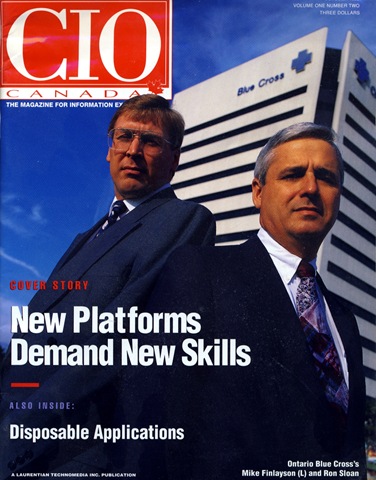
      (CIO magazine) cio-obc

      and most of all they were delivered on-time, on-budget with very satisfied clients. I also co-led the consulting excellence initiatives for the subsidiary. My performance on these projects led to my nomination for numerous “Club” and “Eagle” awards, which entitled you to go sit on a tropical beach somewhere, play some golf and have a drink with the corporate executives. The most important of which was the time with the executives to make your work and yourself known. My work expanded outside Canada in year 3 to propose a project for a state agency. It was accepted, the project went well and I received an offer to work with another group within Unisys, the Health Information Management group. I was assigned to the architect role and was leveraged on many initiatives throughout the US, with larger and more responsible positions. I invested a great deal of personal time in developing industry and technical knowledge in the Healthcare space including new technologies and specialty technologies. Within a couple of years, the work got noticed by Corporate and I was asked to join Worldwide Operations as the   “fly-and-fix” architect. This role was singularly the most important role of my career. Not only did it provide a global perspective, with projects throughout the world, but it placed me in high-pressure, high-profile situations where my work and counsel was directly consumed by the executive teams on both sides of the table. It also forced me to do develop expertise in financial services, capital markets and a number of specialty areas and  technologies plus legal and contracts. With this 80 hour per week job, I can safely say that every other waking moment was spent on study. By the time I landed in whatever city on the globe that required my attention, I knew the client, I knew their business goals, I knew the technology, I knew the client system , key players and roles, I knew the our team members and roles, I knew the symptoms of the problems they were facing and I had a plan.  This role put me in the boardrooms of major corporations and institutions worldwide and allowed me to learn first-hand the “big project” skill sets. Big meaning … $300-$800 Million projects. By this time I was bearing the title Principal Architect. I was in the Worldwide Operations Group when Unisys took on a joint project with Tandem to create a non-stop Windows NT based solution for NASDAQ. From the this initiative, Unisys formed the Worldwide Enterprise NT Services Organization focused around bringing Mainframe class applications to the Microsoft Windows platform on Unisys CMP (Cellular Multi Processor) hardware. From this the project the team took on another challenge, the wholesale replacement of legacy mainframe systems at one of the largest US banks. A few months into the initiative, I was called in to review and assist this project get some forward traction. I worked with the team, reset the architecture and the plan and due to my experience doing this on a global basis was selected to present the “reset” to the CIO and steering committee. They agreed to the reset but with 1 condition, I was to be the new project lead. My days of globetrotting were over. This was nearly a 4 year commitment that allowed me to hire over 500 people, manage daily 250 of my team and co-lead another 200+ of the client’s. The project was the highest performing project in the company’s portfolio. That and an ability to sustain growth, high team morale and excellent customer satisfaction led to my Managing Principal board review and subsequent promotion to Principal.

    • Now everyone’s journey will be different, but  I can offer the following advice based on my experience:

      • the Partner track is a different road than technical consulting excellence
      • Money matters – you have to prove that you can drive growth and sustain profit
      • Relationships matter – you must create, foster and grow deep, trusted relationships with both Senior and Operational management within your client organizations – Remembering that the Operational manager of today may just be your CIO client in a few years.
      • Your track record is critical
      • You can learn something from every CxO you meet, plan to meet lots of them
      • Be sure that being a Partner is what you really want before going down that road
      • Above all,  maintain your personal integrity, solid client relationships will sustain beyond the label of the firm you work for as long as you do. It is ultimately much more important than your run for partnership. You need not look further than the recent Toronto newspapers for examples of what happens when you don’t or events like the spectacular implosion of firms like Anderson. Integrity in the Deal

      When I left Unisys I asked my most recent client, the CIO for a reference… It has meant much more to me than my old business card.

      “…He brought tremendous knowledge to the project related to software integration, new technologies to enhance performance and project management skills that are absolutely essential to a project of the magnitude of our endeavor. …It is with utmost confidence that I can recommend Mr. Hunter as a highly competent, knowledgeable IT professional. His matter of fact, low key style coupled with a strong work ethic and character of the highest integrity makes him an asset to any organization that can capitalize on his skills”

      So if you are headed for Partner… I wish you success! If you are not…. then this blog site is really for you.


    • Posted in Consulting Excellence | 1 Comment

      I AM SO … NOT A MAC

      nomac jlong iphone2

      Now I like technology. The female Australian voice (Karen) in my GPS. Cool.  Bing maps and street views. Cool. The button I press on my remote for my Cadillac SRX that resets the seat, air temp, radio station and mirrors from where my daughter left them. Cool.  But an iPhone?

      I was sitting on an Air Canada flight this week (as usual) and the person next to me is squinting at his iPhone watching a movie. (There are likely 2 dozen free in-flight movies showing on the seat back in front of him at many times the form factor). Some of us travel many miles to an IMAX theatre. Why?  The size, the clarity, the impact of the sound system that relates to the movie watching experience, and we pay extra money to get it. Yet, some people are happy to squint at a tiny screen for 120 minutes to get what as an experience? All four pixels of the cinematography you can see? Those action shots as the 30 FPS display rate drops annoyingly below 15 FPS as the Twitter-minder gears up to tell you, you haven’t tweated in the last two hours? The pleasure of moving it from hand to hand as your eyes try to refocus on this unsteady object? It is almost like an anti-establishment thing. You are so engaged in trying to be Justin Long (above with the big J, the 32 year old Mac guy in the commercial) that you lose all common sense and sit waving your arms watching a movie freeze-frame flicker for 2 hours.  Hmmm..

      On my phone…

      • I make and take phone calls
      • I connect via Bluetooth to my hands-free
      • I check my corporate and personal email,texts, calendar and voice-mail
      • I occasionally send an email or a text from the phone
      • I use it as a backup alarm clock when I am staying at a cheap hotel
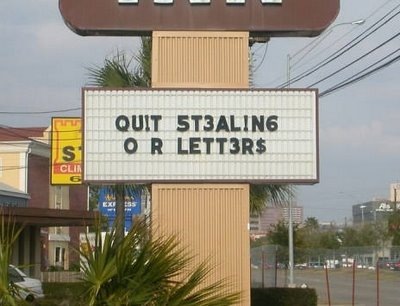
      • and once every year I will capture a funny image, because my real Nikon camera is not immediately at hand.

      funny sign

      I own a small tablet pc, full size laptop and a desktop PC.(all Windows 7 by the way) Both portables have 3G access and Wireless Ethernet. Why is it I would want an iPhone?

      It eludes me.  

      okay iPhone-toting Blog-followers… educate me.

      Posted in Musing | 1 Comment

      Problem Solving … The PHD Course (part 3) Defining Success

      In my blog Problem Solving … The PHD course (part 1) we talked about the first step, getting your client’s permission to investigate and explore their problem space. Part 2 talked about understanding the problem space and now we can investigate what defines success for your client and your client’s “system” .

      Defining Success – Does resolving the problem define success?

      Can you help me get my cat down from the tree?…. Certainly! He says.

      Problem Resolved.

      striped%20cat%20up%20tree chainsaw180_tcm9-113127

      What defines success? It obviously is not just the resolution of the problem but also:

      • how it is resolved, the process and the remedies
      • any negative or positive impacts to the client system associated with the resolution
      • how fast it is resolved
      • how much the resolution costs
      • what risks are involved in the resolution
      • etc.

      So how do you find out what your client defines as success?

      Allow me to suggest a technique.

      Synectics

      Synectics is a technique specifically designed to drive out a solution that the client and client system is committed to implement. In other words, a solution they “like”.

      Step One: Have your client state the problem in their own words.

      “I need to get my cat out of the tree.”

      Step Two: Direct Analogies

      Ask analogous situations to be described from the people involved.

      • “Rescue a person from a burning building”
      • “Find a lost pet”
      • “Go on a scavenger hunt for something valuable”

      Ask the client to pick one that they think represents facets of the problem. This is the “Springboard”

      Step Three: Analysis of the Direct Analogy
      Write down all of the facts and information about the analogy. It is important at this stage not to refer to the problem as given but just to concentrate on the characteristics of the analogy.

      Let’s assume the client chose “Rescue a person from a burning building”

      Facts

      • safety of the victim
      • emergency
      • use of professionals and proper equipment
      • speed of response – 911
      • speed of resolution
      • insurance
      • water damage
      • danger to rescuers by smoke or fire
      • etc.

      Your client has picked intuitively something that aligns with the problem and resolution. By driving out the facts, many of these will be attributes your client wants considered in the resolution.

      Step Four: Force Fit and Viewpoint
      Now think about the problem in terms of the characteristics of the analogy. Look for ideas or perspectives about the problem by applying the analogy to it.

      Take the list of the characteristics, one by one, and see if there is a link, application or perspective for the problem.

      For example:

      Problem – Cat is in the tree

      Attributes:

      • safety of the victim (cat)
      • use of professionals and proper equipment (ladder and competent person)
      • speed of resolution (time to accomplish this is important)
      • danger to rescuers (not putting the people involved in the resolution at high risk)

      Now do a quick comparison of the options to get the cat out of the tree compared to this list attributes the client “likes”


      Spray the Cat with a Water Hose

      Fell the Tree

      Climb a Ladder Safely

      resolves problem

      Yes

      Yes

      Yes

      safety of the victim

      No

      No

      Yes

      use of professionals and proper equipment

      No

      No

      Yes

      speed of resolution

      Yes

      Yes

      Yes

      no danger to rescuers

      Yes

      No

      Yes

      The Synectics exercise need not be explicit. What I mean by that is that you don’t have to sit your client down and say “and now we’re going to do a synectics exercise”

      Let me provide an IT style example instead of “Tigger the cat”. Remember we are not using Synectics to drive out the potential technical solutions to the problem, we are using it to drive out what your client will “like” about any potential solutions.

      IT Problem: Bug counts are too high in development and take too long to fix resulting in delayed time to market for new applications

      So if this wasn’t your industry how would you describe it?

      • well if I owner of  a barber shop, there were too many bad haircuts given by my employees
      • if I were NASA, all the little launch things that could go wrong would add up to 10 years between each shuttle flight
      • if I were Toyota I’d be recalling millions of vehicles for a faulty gas pedal every few weeks.

      Which one represents your problem the closest?

      NASA

      Attributes or Facets of this problem?

      • very many people
      • lots of processes
      • complex processes
      • complex technology
      • fragile technology
      • technology that has state “ready, not ready”
      • lots of testing
      • huge cost per mission
      • delays are very costly
      • people waiting to see it fly
      • safety of astronauts and public is paramount
      • superb training
      • CMM level 5
      • lots of contractors
      • communication
      • presidential oversight
      • government and private industry funding

      Pick out the attributes you think has some reflection in your environment and talk to me about it ?

      • very many people – too many people on a single problem frustrates good communication, smaller teams are better
      • lots of processes
      • complex processes – processes are necessary but if they get to be too much will people comply?
      • complex technology
      • fragile technology
      • technology that has state “ready, not ready” – we need to make sure that all the parts are in “ready-state” at the same time, coordinate components
      • lots of testing – I don’t think its the volume of testing that is wrong, just the thoroughness
      • huge cost per mission – we need to reduce the cost of each delivery
      • delays are very costly
      • people waiting to see it fly
      • safety of astronauts and public is paramount – I believe in my people, they are good and smart and motivated but something else is wrong
      • superb training – people don’t understand the processes or tools at a level they need
      • CMM level 5
      • lots of contractors – too many outsiders just make the internal communication worse
      • communication
      • presidential oversight – our people need to understand that these delays have big visibility
      • government and private industry funding

      ….. Okay we gave garnered some important feedback about what the client is thinking about.

      Let’s pre-test these with some hypothetical resolutions.

      Bring in an Outsourcer to do it all.

      Augment the Team with Specialty Contractors

      Train and Equip the team with new tools and simplified processes

      Do not add people

      N/A – you fired them all

      No

      Yes

      Simplify Processes

      No

      No

      Yes

      Coordinate Delivery

      No

      No

      Yes

      Reduce Cost

      Yes

      No

      Yes

      Believe in your team

      No

      No

      Yes

      Training

      No

      No

      Yes

      No more outsiders

      No

      No

      Yes

      Visibility

      No

      Yes

      Yes

      So what type of solution is your client most likely to support in implementation?

      Synectics.

      Posted in Consulting Excellence | 2 Comments

      Problem Solving … The PHD course (part 2) Understanding the Problem Space

      In my blog Problem Solving … The PHD course (part 1) we talked about the first step, getting your client’s permission to investigate and explore their problem space and the conditions by which they would be satisfied with the resolution.

      Now we need to investigate the problem.  Some typical client problems?

      • Inability to meet IT delivery schedules or keep pace with  business needs
      • IT costs too high
      • System instability or availability
      • Business Process is ineffective, error prone or slow
      • Customer Dissatisfaction
      • End users can’t get the information they need fast enough
      • Usable information is not available in a timely manner
      • etc. etc. etc.

      So where do you start in the problem resolution process?

      1. understand the problem space
      2. understand what defines success for your client and your client’s “system”
      3. solve for resolution options
      4. optimize options
      5. decide between options
      6. secure buy-in for the implementation of the desired option
      7. implement the option
      8. evaluate the success of the option
      9. revise or improve option
      10. repeat step 8

      Understanding the Problem Space

      The first thing to notice is that I did not call it the problem, but the problem space. Even in the simple example used in Problem Solving … The PHD course (part 1) of the flat tire, there are potentially many problems surrounding, interconnected to and related with the one stated by the client. (ie. You can call a tow truck, but if you make the client late for a meeting with his or her  CEO you may have created a bigger problem.) There are 2 steps to understanding the problem space:

      • 2a – Getting  Perspective on the problem space
      • 2b- Getting a good definition of the problem space

      Getting  Perspective

      perspective3 perspective24

      First stand back and decide who will have views of the problem.

      • Your client’s view
      • Their Customer’s View
      • The Operational View
      • The Strategic View
      • The Time View

      Perspective is important in all 5 of these views. Arcturus is the 3rd brightest star in the sky and when you look up, a mere pinpoint in the sky.  In reality, Arcturus is 26 times larger than the Sun which is in turn is 110 times larger than earth. AKA really, really big. So depending on your perspective, Arcturus is really, really small or really, really big. Hence the importance of having perspective and knowing the perspective you are having. (I think I should trademark that saying…)

      The only way you sort this out is to ask questions.

      • If I were the client how I would I see this?
      • If I were the client’s customer how would I see this?
      • If I were the IT dept, the Development Manager etc. , how would I see this?
      • If I were the CEO how who I see this?
      • If this were not addressed for 1 month, 3 months, 1 year, 5 years what would happen?

      Your client’s view is important but not definitive. What are the “customers” of the solution saying or needing? How is it or can it be operated? What are the expectations of maintenance, performance, usability etc? What are the first steps and nest steps? What is the big picture? The end game, The utopia? Now what are the timelines,  inferred, derived, expected and realistic and the delta between each?

      Step 2b) Getting an good definition of the problem space

      Instead of a subjective, opinionated debate, defining a problem can be an objective discussion. It is only a problem because it is stopping your client from achieving something. What is it? What is it that prevents your client  from reaching their goal?

      Ask these questions.

        • What have they tried before?
        • Why didn’t it work?
        • What does not work?
        • What does?
        • If you had a magic wand what would they fix first? Why?
        • Who are the users?
        • What do they think?
        • Can we solve it? Is it worth solving?
        • Is this the real problem, or merely a symptom of a larger one?
        • If this is an old problem, what’s wrong with the previous solution?
        • Can I risk ignoring it?  If not, why not?

      Step 1 – Get Permission

      Step 2 – Get Perspective  and get a definition of the problem space.

      Windows Live Tags: Problem,client,permission,Some,problems,needs,System,error,Customer,Dissatisfaction,Usable,manner,implementation,option,Space,example,truck,steps,Perspective,definition,View,Operational,Strategic,Time,Arcturus,times,earth,importance,trademark,Development,Manager,customers,solution,expectations,maintenance,performance,nest,Step,Instead,discussion,goal,wand,worth,symptom,users,options

      Posted in Consulting Excellence | 3 Comments

      Problem Solving …. The PHD course (part 1) Permission

      Every day we solve problems, some small and some large. As humans we are highly effective at problem solving as long as they are our problems. When we have a problem we implicitly understand the context, the definition of the problem and perhaps most importantly the outcome or resolution to the problem that we would find satisfactory. It’s easy, after all it’s our problem.

      When the client is introduced as the problem owner, it is not so simple.

      When the client has a problem, you do not immediately understand the context, the attributes of the problem, the definition of the problem nor the resolution or remediation that may satisfy the client. To be successful at solving the client’s problem you will need to discover and understand all of these factors.

      The single most important thing I have ever learned in client problem solving is this:

      You will only be successful at problem resolution with your client to the degree they give you permission to explore the problem area.

      Let’s explore this.

      Let’s assume you are standing in line at Starbucks for your morning coffee. The gentleman ahead of you orders a double espresso. You lean over and ask him:

      “What is your annual salary?”

      His reaction is likely:

      • perturbed
      • wary of you and your motives
      • not going to answer your question under any circumstances

      Now let’s change the scenario very slightly.

      Let’s assume you are standing in line at Starbucks for your morning coffee. The gentleman ahead of you orders a double espresso. You lean over and ask him:

      “Hi, I’m a PHD student doing research on high performers and the use of products with caffeine. Would you mind answering two simple questions about your coffee and demographics for me?”

      “Uh…. okay”

      Handing him a sheet of paper.

      please select your income category

      1. < $80K
      2. $80K – $100K
      3. $100K-$120K
      4. > $120K

      99.9% of people will  now answer the question. Why? Because you asked their permission.

      Two things happen when you ask permission.

      1. you provide your client a graceful way to decline
      2. you gain their commitment in answering and disclosing the information because they are compelled to fulfill on their agreement to do so.

      Let’s look at a simple problem.

      flat_tire

      You are a little late heading out the door this morning and you go to your car in the driveway. It has a flat tire. You have many solutions to this problem.

      • call the auto club and have them fix it and call the office to say you will be delayed
      • go inside, change into jeans, change the tire for the spare,  go back and change into your business clothes again and drive to the office
      • defer the problem until later, call a cab and go to work

      All three resolutions are possible, you can evaluate the impact on your job, your Armani suite or the financial impact of taking a taxi. Whatever you decide, you will be satisfied with the answer because it is your problem.

      Now let’s change the parameters slightly.

      You have gone out to lunch with your client. They have driven their own car and when you return from lunch, his or her car has a flat tire. You client says “I can’t deal with this right now, you need to fix it.” and hands you the keys.

      What are the things you don’t know.

      • Does you client have an auto club membership?
      • Do they have a meeting with the CEO back at the office they cannot miss?
      • Does the client expect you to change the tire in your Armani suit. Will they be upset with your attitude if you don’t.
      • Will the client think a taxi is a waste of money or you are skipping out on the responsibility of fixing the problem by deferring it.
      • If you did call a tow truck, will the delay mean they will miss a key meeting.
      • If they needed to inform the office, do they have a cell phone, the right contact numbers etc.

      The list of what you don’t know will keep growing and growing and the probability that you will select a resolution that client will be unsatisfied with is in direct proportion to your lack of knowledge around the problem space.

      The only way to resolve this is to ask questions and  to emphasize again.

      You will only be successful problem resolution with your client to the degree they give you permission to explore the problem area.

      “Do you mind if I ask a couple of logistical questions?”

      No problem.. sure

      “Do you have an auto club membership?”

      “Do you have time constraints for getting back to the office?”

      etc.

      Permission

      coming up…. Part 2 – understanding the problem space

      Posted in Consulting Excellence | 3 Comments

      The Virtuoso Development Team – Myth, Legend or Reality?

      “In nearly any area of human achievement – business, the arts, science, athletics, politics – you can find teams that produce outstanding and innovative results. The business world offers a few examples. Think of the Whiz Kids – the team of ten former U.S. Air Force officers recruited en masse in 1946-who brought Ford back from the doldrums. Recall Seymour Cray and his team of "supermen" who, in the early 1960s, developed the very first commercially available supercomputer, far outpacing IBM’s most powerful processor. More recently, consider Microsoft’s Xbox team, which pulled off the unthinkable by designing a gaming platform that put serious pressure on the top-selling Sony PlayStation 2 in its first few months on the market. We call such work groups virtuoso teams, and they are fundamentally different from the garden-variety groups that most organizations form to pursue more modest goals. Virtuoso teams comprise the elite experts in their particular fields and are specially convened for ambitious projects. Their work style has a frenetic rhythm. They emanate a discernible energy. They are utterly unique in the ambitiousness of their goals, the intensity of their conversations, the degree of their esprit, and the extraordinary results they deliver.” – Bill Fisher and Andy Boyton , Harvard Business Review

      I recently sat through a presentation by Dr. Bill Stone, the parts of the presentation I can share that are not under non-disclosure are gleaned from public websites that I will reference.

      Bill Stone goes to the moon and opens a gas station 

      billstone

      Watch the Presentation – start it at 10 mins 49 seconds in, you will be glad you watched it

      Bill has a concept to make money and jumpstart large scale space exploration.  Instead of blasting off rockets from earth and carrying tons of fuel into orbit, make the fuel on the moon from resources there and use it as a Lunar “gas station”. That way the concept of “you can only go as far as what you can carry” goes away becoming a “paradigm buster” in how we approach space travel.

      Okay so what kind of a team do you need to pull off a $15+ Billion project that is literally out of this world? You know the answer. A Virtuoso team is the only answer.

      So let’s move the decimal place over two places to the left.  A $150 million IT development project.  You could think of this two ways.

      • Option 1 :  400 people @ $125K/ yr working for 3 years
      • Option 2:   A virtuoso team of 40 working for 1.5 years each member earning $500K per year and putting the other $120 Million back in the bank.

      So is the virtuoso development team a myth, legend or reality?

      Here’s are some facts.

      • Development virtuoso’s exist. They can conceptualize, analyze, design, implement and test at speeds that, independent of technology, would astonish people. Having worked with thousands of developers as both peers and subordinates, I can ,from an array of thousands, name … 13. (Ivan, Rules Rob, Good Bob, Evil Bob, Mukesh, Lance, Charlie,  Steve, Shawn, Brian, Roger, John and … Ian)
      • Development virtuoso’s are all highly opinionated, relentless, stubborn and cannot spell the word comprimise  (see what I mean?)
      • Oddly, they also all appear to be fans of Douglas Adam’s Hitch Hiker’s Guide to the Galaxy books though I am not sure how that is relevant.

      Hence the problem. The most dangerous thing in any IT project is the lone wolf or wolfette. The one that doesn’t lead the pack, doesn’t run with the pack but instead is off hunting its own game. Most project leads are afraid and tend to ringfence the virtuosos (they use the word "focus") because they don’t have the capability/leadership to form them all into a coherent team. The reason we don’t see the Virtuoso Development Team  more often is that the missing element in the team concept is the leader. The guy or gal that will (to change metaphors mid-paragraph) herd the cats. These are not just your normal everyday house cats. These are the jaguars, lions, tigers,  panthers and occasional BOBcat’s (see above) all rolled together. It perhaps needs a Bill Stone or Bill Gates to do it.

      There are a great number of similarities between opening a gas station on the moon and a massive new IT project. (sorry Bill but it’s true we just have O2 to our advantage) There are hundreds of unknowns, there are thousands of critical decisions to make, a mistake in the foundation will reflect itself many times larger on later stages and it’s intricate and complex.

      So can the virtuoso development team exist? Yes. Do you see it happening?  Not yet.  Each time I come across a project that is perfect for the virtuoso team, I call  and they are at Stanford, projects in Illinois, Ohio, DC, making millions as an outsourcer in India, doing a startup, being king pooh-bah at MS, retired?, always engaged, saving the world or too busy writing a blog and a book. So yes, in theory, we can do it. In practice….. hmmm…

      To get the virtuoso players to stop their silly day-to-day jobs and spend time on the moon-shot. That’s the key. To establish a vision that is so big, so compelling that every one wants to be a part of it. It’s real but …

      Bring it on Bill…. your team awaits.

      Posted in Musing | Leave a comment