The new and improved – Mr. Bill Gates

bill-and-melinda-gates

On a project in the US in 1996 I met a former employee of Microsoft. That in itself is not such an unusual thing, but to meet one of its first former employees is. A guy who at the infancy of Microsoft, “had it up to here” with Bill Gates and walked out of the Albuquerque, New Mexico office in 1978.  Even in 1996, he would likely have been a centi-millionaire if he had stayed with Microsoft. I chided him a bit suggesting that it was one of the more dramatic career bloopers I had ever heard of and he replied “not really, you don’t know Bill”. Very likely I did not. It would be some years later before I met Bill Gates.

I joined Microsoft 5 years later in 2001 just  after the .com bust. Microsoft stock was now trading in the low $20’s  about one third  of it’s dotcom peak. However it had made a lot of Microsoft shareholders and employees very, very rich in the process (for those that cashed in) We called them VIP’s (vested in peace). One of our VIP’s drove a different colour of Mercedes SL500 convertible every day to work just for variety. The parking lot was filled for a little while with a selection of Mercedes, Porsches, Corvettes and Ferrari’s on a given day. Microsoft had come off a stock rampage to be met with accusations of monopolies, a grass-roots ABM (Anything But Microsoft)  Open Source movement  and some really grumpy investors impatiently looking for that next wild ride up to 300% stock return. Things were not so smooth now.

The Bill Gates I was now working for was a plain spoken , you’ll get what he thinks unfiltered, kind of guy. He told the the DOJ they were telling “outrageous lies”, he told customers he was “going to destroy three companies: Sun Microsystems, Oracle, and Netscape”  and everyone knew that Bill had the final say and you did things his way or the highway. My first day at Microsoft I was assigned someone to show me the ropes. The first thing he said to me was“yes you really can email Bill Gates but don’t, you won’t like the response”

Now let me also say, that I don’t think for a moment that Microsoft would have come as far as it did or produced the world-changing software that it did without Bill’s leadership and uncompromising, hard-hitting approach. He had been accused by the media of being volatile, arrogant and many other unflattering terms. It would be very hard to find anyone who would say that again today.

I do follow BillG on twitter now @BillGates (along with 2 million others)  for two reasons. It is evident that he really puts some concise thinking into what he has to say and that it will be both globally important and informative. One such tweet recently led me to the following Gates Note Article which prompted this blog post.

Bill wrote a review of Matt Ridely’s book “The Rational Optimist”.  His review shocked me.  Not because of his scathing caustic remarks of the content but because those remarks were nowhere to be found. The Bill Gates of yore, if he responded at all, would likely have provided a few dismissive remarks and then publically have classified the author as one of the lower life forms.  But today, the new and improved Bill Gates…


  • “Although I strongly disagree with what Mr. Ridley says in these pages about some of the critical issues facing the world today, his wider narrative is based on two ideas that are very important and powerful.”
    • (Politely disagreeing but acknowledging value)
  • “Having shown that many past fears were ultimately unjustified, Mr. Ridley finally turns his “rational optimism” to two current problems whose seriousness, in his view, is greatly overblown: development in Africa and climate change. Here, in discussing complex matters where his expertise is not very deep, he gets into trouble.”
    • (Criticizing the finding of the author but finding a plausible reason for the errant view without making it deeply personal or offensive to the author)

I read Bill’s article and realized that he had powerfully influenced public opinion of the findings in the book, likely changing many reader’s views to align with his and had achieved it because  he has changed and improved his approach with the public.

We as consultants could learn from Bill Gates when he was the powerhouse inside day-to-day operations inside of Microsoft, but I think we can learn even more from him today and will continue to learn as he evolves into a true statesman and ombudsman for the world. Keep watching…

Posted in Consulting Excellence | Tagged | 1 Comment

Facilitating the “Angry Mob” meeting Part 2

Business-Meeting-psd53664


In my blog post Facilitating the “Angry Mob” meeting – Part 1 , I talked about the core things the facilitator needs to do to prevent problems in an “Angry Mob” meeting. Now we need to talk about what to do when problems happen. Some common problems are:

  • Side-Bar Conversations
  • Endless Discussion
  • Conflict
  • The Power Grab
  • Slow Decisions
  • Malicious Silence
  • Going too Deep – Dealing With Minutia
  • Staying on Time

In this blog post (part 2) I will comment on three of these:

Side-Bar

The most effective way to negate the impact of a facilitator is to simply start having your own meeting, a side-bar conversation. By having a side-bar it says to the rest of the group that their opinions don’t matter, that the real decisions can be made by the side-bar participants and as the the facilitator you can’t let it happen.

Buy a tazer if you have to, but don’t let side-bars ruin your meeting. More polite than a tazer is perhaps:

  • interrupt with a friendly reminder of the ground rules – 1 meeting
  • “Sorry everyone, could we have silence for a moment. Jay, could you repeat that for the rest of the people so we can discuss it as a team?”
  • “Sorry everybody, we seem to have multiple meetings going on here, I will have to ask you to make comments as I go around the table person by person”
  • “Ok everybody we’re going to take a 15 minute break. Jay, can I have a side-bar discussion with you now? I know we don’t permit side-bars but I need to break that rule for a minute during our break”

Endless Discussion

funnel

We have all been in them, the endless discussion. Most of the time it is caused by a lack of planning and focus for the meeting, but sometimes caused by poor facilitation.

  • if it’s dragging on without progress, move it to a parking lot item with specific information requirements to gather to have collected before you meet again
  • detect and respond to “personal agenda’s” . “Jim, I believe you have made your position clear about <topic>. Is everyone agreed that we understand Jim’s concern here? Yes? (round table) Let’s move on.”
  • topic waffling – “Sorry I am not sure how this directly relates to our topic. Can you either explain the relationship or let’s cover this another time?”
  • dog with a bone. When a person or group of people just won’t let go of a topic. – “take a break, hold the people who had latched on to the issue behind and talk specifically about the danger of their behavior and ask what is required to get forward movement ie. What’s it going to take to get you to drop that bone?”

As a facilitator you can improve and get closure on discussion by frequently summarizing back to the group what you are hearing and reminding the group of conclusions/agreement already reached. This creates a funnel effect where there is less and less room for the discussion to wander as time progresses.


Conflict

image

If there was total alignment, there is pretty good chance the client doesn’t even need a facilitator. So don’t be surprised that there will be conflict. Even when you set ground rules like “No comment is stupid”, inevitably in a high emotion meeting someone will say “That’s a stupid idea” or worse. Dealing with conflict isn’t the most difficult problem for the facilitator, as long as you are the facilitator and not taking sides in the conflict.  Six simple steps..

Step 1. Recognize conflict and STOP THE MEETING. Don’t ignore it, it will not go away.

Step 2. Confront the issue in non-threatening way. “Bill, Cary It seems like we have an issue to deal with before we can proceed…”

Step 3. Surface concerns in the full group.

Step 4. Address concerns in the full group.

Step 5. Seek acknowledgement that the issue has been dealt with and permission to continue

Step 6. Restart the meeting


Posted in Consulting Excellence | Tagged , | 3 Comments

Facilitating the “Angry Mob” Meeting

Business-Meeting-psd53664


Imagine for a moment, the nightmare scenario. You have been engaged to deploy a new technology for a client. The CIO unilaterally made the decision to deploy it. The technology will eliminate IT jobs and will cause 50% of the IT group to either terminate their employment or re-skill in a technology area that is foreign to them losing their; status, years of expertise and seniority within the company. However in their current roles, you need their cooperation as a team to ensure the successful deployment of the technology. Some have just given up, some are going to fight the decision, some like the decision and others have turned to drugs and alcohol.

(OK. It was actually a Fortune 100 company and the CIO got tired of the Java/Mainframe versus .NET wars, eventually simply proclaiming that .NET was the direction and that all current systems would be moved over to the new platform within 7 years. I was engaged to facilitate the “transformation” effort and get them an executable strategy and achieve the first 2 deployments in the strategy. The company was 70% Java and Cobol Mainframe personnel with an average tenure of about 20 years, too young for retirement and too old to enjoy a wholesale update in their skill set.)

From the outset you understand that this will be a high emotion, high stress process for the participants. So good facilitation skills are paramount.

Creating the workgroups

  • Don’t attempt an initial mass “we’re all in this together” meeting. You’re not. Just face that fact.
  • Structure initial group work carefully
    • Peers only, no room for anyone to “pull rank”
    • Select people around a small achievable objective
    • Keep it small enough to fit in a standard meeting room but be inclusive, don’t shut-out the known opposition

Know your role going in

  • Facilitators facilitate and influence. They do not make unilateral decisions or defend decisions.

Workgroup Preparation

  • Crystalize the objective of the workgroup so that there can be no misunderstanding of the purpose

(The objective of this workgroup is to determine how we can get a detailed and complete inventory of Java and Mainframe applications. We will first define the level of detail that is required and then recommend and approach for each environment on how best to collect this information, the correct people to involve in the process and what target schedule should be placed for the completion of these activities. )

  • Sanity Check the objective – Is it small enough for the first workgroup? Is it achievable? Is there anyway that a participant could legitimately refuse to align with the objective. (Example: If the group were tasked with the objective to pick the first application to transform, there may be hundreds of viable excuses to not provide full cooperation to the process)
  • Gradually increase the size and scope of objectives after a track record of success has been demonstrated.
  • Send the objective in advance, cc: the executive sponsor and arrange a reply-all email from sponsor that shows support for the initiative and thanks everyone in advance for their commitment to the process.
  • Create and send the agenda in advance not for comment but for courtesy.

Workgroup Process

  • Re-introduce yourself, who you are, your role as facilitator.
  • Review the Agenda, Breaks and Time expectations
  • Explain the ground rules (minute taking and publication, attendance requirements, proxy policy, ecp [email, cell phone & pager] use etc.)
  • Validate that each participant knows the other and their role. (most likely the case)
  • Open the discussion on the first agenda item in question form.
    • Item 1 is the determining the level of detailed inventory. Let’s start with the mandatory information, what do we need to know about a Mainframe application? Jeff, why don’t you start us off as you own the MF app portfolio?
  • Control the flow, ask all participants questions. Ensure everyone participates.
  • Summarize out loud what you hear, not just to ensure accuracy for the minutes but also to ensure that every participant heard it the same way.
    • So what I heard you say is that in the MF portfolio, the user list, # applications, application summary, security requirements and code-base size should all be considered mandatory information to gather? Is that correct?
    • Yes. What should be added to this list? Jack what is your view?

Common Process Problems

  • Side-Bar Conversations
  • Staying on Time
  • Endless Discussion
  • Conflict
  • The Power Grab
  • Slow Decisions
  • Malicious Silence
  • Going too Deep – Dealing With Minutia

Hints on how to deal with these problems coming in my next Blog post.

Posted in Consulting Excellence | Tagged , | 4 Comments

Poll–What’s the most important thing to you as a consultant

Posted in Consulting Excellence | Tagged | Leave a comment

Project Management – An Interview with Niccolo Machiavelli

machiavellis_portrait

We are here with Mr. Niccolo Machiavelli. Mr. Machiavelli is the author of the well known publication, “The Prince”. Welcome to the show Nick!

NM> Thanks Ian, I am glad to be here.

Nick, when you look at a project manager what is the first thing you assess?

NM> The first thing I want to know is; just how smart is this PM? You can easily find that out. The first method for estimating the intelligence of a PM is to look at the people they have  around them. If it’s a good team, you know the PM is on their game.

What are the  biggest 4 challenges you see in projects today?

NM>The biggest one is there is nothing more difficult to take in hand, more perilous to conduct, or more uncertain in its success, than to take the lead in the introduction of a new order of things. It’s cultural change management. The adoption of the changes the project will introduce.

NM> In at a close second is the visibility into late tasks. Tardiness often robs us opportunity, and the dispatch of our forces. Finding out too late is problematic.

NM> In third, The wise person does at once what the fool does finally.  I see PM’s who detect a problem, know a resolution plan but fail to act quickly enough. Eventually they do it, but they could have corrected it a lot earlier.

NM> In fourth I would say managing change and change in requirements. One change always leaves the way open for the establishment of others and if you are not careful the floodgates open.

Nick, what is your best guidance for managing risk in a project?

NM>Ian, let me say this first. All projects have risk. Never was anything great achieved without danger, so what we can do is prepare for that danger. As the project progresses we want to keep constant vigil on the project risks. The more sand has escaped from the hourglass of our life, the clearer we should see through it. By constantly improving the clarity of our understanding of the risks, we can continuously make better and better plans to deal with the risks should they materialize. The key is to keep updating it as time progresses.

What do you suggest a PM do when things go wrong on a project?

NM> In my experience, communication is always the key. Don’t dilly-dally about with bad news. Severities should be dealt out all at once, so that their suddenness may give less offense. Get bad news out on the table quickly and get it all out. Good news stories ought to be handed out drop by drop, so that they may be relished the more, but the only way to handle a real crisis is to get everybody informed and everybody communicating with all of the information. As you start to fix the problem don’t rush to proclaim total victory, benefits should be conferred gradually; and in that way they will taste better.

What about dealing with Project politics?

NM>Yes it’s a sad reality but all projects have a political angle to them. The best advice I can give is the one who adapts his policy to the times prospers, and likewise that the one whose policy clashes with the demands of the times does not. Be flexible as whosoever desires constant success must change their conduct with the times.

So what is the real secret to being a successful Project Manager?

NM>Successful projects come from the PM’s and the team’s will to succeed. Where the willingness is great, the difficulties cannot be great.

Thank you Nick for your time today and we look forward to having your insights with us again in the future.

Posted in Consulting Excellence | 2 Comments

Why you can’t find it in Google–What’s Next and Why their share price will drop

Search engines like Google are fundamentally based on the presence or absence of specific words or phrases in a given object. The object (html, picture, video) is uploaded to an internet site, the search engines grabs the available data and stuffs it into a searchable index. Then based on how much money you pay them, you end up on page 1 or page 4,568 of the search result returned if and only if the person enters the same words you used. An example perhaps will help.

DSC_8415

The caption and tags for this picture uploaded will be “Surfing at Cox Bay – January 2011

The search engine will grab the data from my Flickr photo site and index it accordingly.

Now I go to the Google or BING or Yahoo site and type in “Things to do in Tofino BC in the winter”

The above photo will never be returned in the set as the metadata does not match.

Enter the next generation of Expert System driven Knowledge technology.

The folks at CMU have been busy working on this problem with creation of the SCONE engine. 

The technical description is:

“Scone supports simple inference over the elements and statements in the knowledge base: inheritance of properties from more general descriptions, following chains of transitive relations and detection of type mismatches.In addition, Scone provides support for search within the knowledge base. For example, we can ask Scone to return all individuals or types represented in the KB that exhibit some set of properties, whether these properties are explicitly stated or inherited from a superior class in the type hierarchy.Scone’s type hierarchy allows multiple inheritance and exceptions. In addition, Scone supports multiple contexts in the knowledge base. The context mechanism allows us to efficiently represent and reason about different states of the knowledge base, including hypothetical or counter-factual states, various opinions, and groups of statements that are true only in some specific time or place.”

Okay you can cut and paste that statement into a translator or make do with my version of it which is this.

In its simplest form take the surfing example above.

“Surfing at Cox Bay – January 2011”  we can infer (expert system rule) certain things

  • surfing is a leisure activity, sport, recreation activity (Inheritance)
  • Cox Bay is in or close to Tofino, BC, Canada,  (inheritance)
  • January 2011 it is winter in Tofino, BC, Canada  (inheritance)

“Things to do in Tofino BC in winter”

  • things to do implies the query issuer is looking for leisure, sport , recreation or entertainment events or practices (context)
  • Tofino BC implies a location or surrounding area where activities are found
  • Winter in Canada implies months of Dec through March of any 2 years factually and +/- 2 months colloquially. (Winter is an aggregation of serial months between two years)


The next generation in technology will be much smarter than what we have today. The search in the case above will find that surfing photo when you ask it for “Things to do in Tofino BC in winter”. Yes it is in fact true by the way that surfing is a big draw to Tofino year round including New Years day when I took that photo. What to do in Tofino in winter

It will also change the SEO market. (Oh yeah and the search engine that gets this commercialized first, that’s the one you want to buy all of their stock with every available penny as they will dominate the rest and you will get rich)

It’s not just search engines that benefit from this technology, but imagine the impact on police databases,  medical and bio research and  other commercial applications. Perhaps linkedin?

“Brilliant, good looking architect that knows a lot about little and a little about a lot in western Canada” <find>

Open-mouthed smile

The smiley is actually important to this blog post because the originator of the  : – >  is a gentleman named Dr. Scott Fahlman who created it at CMU in 1982. He is also the Principal Researcher of the CMU SCONE project. 

fahlman-lg

Posted in Technology | 2 Comments

Nailing the Presentation–10 simple rules

03the-kings-speech-high-res

A recent New York Time survey result ranked the greatest fears as:

  • Public Speaking
  • Heights
  • Spiders/Snakes
  • Death

Public Speaking was the number 1 fear by a large margin over the others. You can be an extrovert and still shiver at the thought of public speaking. In fact, fear of public speaking seems to be very agnostic as to whom it will affect. There are lots of great books on the subject and I would not attempt to either plagiarize their content nor attempt to condense it all into a single blog post.  This post is for the consultants who have to do presentations as a part of their job.(ie. most of us). Here are a few quick pointers that everyone can benefit from, both the polished professional presenter and the ones that avoid giving presentations like the plague.

If you have recently seen The King’s Speech and its recount of Albert’s 1925 Wembley Stadium performance, you can appreciate the impact that a poorly executed presentation or speech can have. Fortunately most of us do not have to overcome physical impediments to deliver a great presentation. For most of us, it’s just learning the tricks and practicing them to deliver a great presentation.

What do the following lines have in common?

They were historic – yes.

They changed the world – yes

They were rehearsed ….

Yes the greatest public speaking moments of all time were not the product of improvisation. They were written and practiced over and over again. That in itself is the most important factor in nailing the presentation. It needs to be rehearsed and practiced. Great presentations, badly delivered are still bad presentations. It is astounding to me that some consultants will put more time into animating a PowerPoint slide than they will into making sure they can deliver the content.

You don’t have to be a great presenter to give a great presentation. You have to be a competent presenter to give a great presentation. Yes, the content does actually matter. A great presenter can’t make bad content appealing but a bad presenter can make great content suck every time. You just have to be competent to nail the presentation. You can do that with just 10 simple things…

Presenting? Check to make sure you are doing the following …

  • Eye Contact – connect with 1 person at a time, spend at least 5 seconds of eye contact with that person, it makes you appear friendly, dynamic and engaging
  • You can’t read a script and have eye contact so you need to know your content without looking at it all the time. Create large bullet form reminders within sight without turning away from your audience
  • If you do look at the PowerPoint behind you or other visuals, never talk while facing them or in the process or turning around to face your audience again. You want to connect with them only.
  • Don’t Rush. Too slow is better than too fast, less information is better than too much information. If you are spinning through slides in less than 60 seconds each, you are going way too fast or have too much content for the time allotted.
  • Be yourself attempting anything else will always come off phony.

PowerPoint Content? Check to make sure you are doing the following …

  • Assume the level of intelligence and understanding on the part of your audience and build the presentation for the most knowledgeable attendee not the least. It is better to err on the side of thinking your audience smarter than the opposite. Nothing upsets an audience more than being talked down to.

  • Make 100% sure you are clear on the purpose of the presentation and toss any slide that does not clearly support the purpose

  • Text, Graphs, Pictures– brief, concise and readable, (Narrative should be what you talk to and not on the slide)
  • Tell your audience about the content to be presented,  talk to the content and summarize what you have talked to them about in key points

and lastly # 10 – Rehearse it end to end

“There are always three speeches, for every one you actually gave. The one you practiced, the one you gave, and the one you wish you gave.”  — Dale Carnegie  – Free Dale Carnegie ebook on public speaking available here.

Posted in Consulting Excellence | 3 Comments

When technology goes obsolete

Microsoft_Bob

My friend Steve Dotto (of Dotto on Data TV fame) often says “It’s not what technology will do for you but what technology will do to you that you have to watch”. Last year I was in Seattle for a Microsoft training course, walking out to meet friends for dinner  and was approaching a homeless man on the sidewalk. His sign read “Yes, I developed MS BOB, but I don’t deserve this!”. MS BOB was intended to be a user-friendly interface for early versions of Microsoft Windows and was an abject failure.  I didn’t know if he was kidding or not, but being Seattle it might just have been true and I  gave him $10  on the way by with a “BOB wasn’t as bad as Clippy!” comment. The comment did not seem to cheer him up as much as the $10 did. Not everyone faired as poorly from MS BOB though, Melinda French (a.k.a Melinda Gates) led the BOB product group in the beginning. The product evolved from some Stanford University research and intense Microsoft usability tests. The MS Bob Program Manager Karen Fries described one of the tests using a  a cartoon duck in a Bob prototype: “This guy was very emotional about it–he grabbed my arm and he said, ‘Save all the money on the manuals, and just give me this duck to always be there and tell me what to do.” But people ultimately really hated the duck…(and later Clippy was the focus of the Microsoft users’ vitriol). Some things are obsolete day 1, others take time and others stay relevant.

Moving forward 16 years, we are about to see the obsolescence of another technology, the iPhone. 

iphone

There will be a homeless guy in the streets of Cupertino in the future with a cardboard sign (or perhaps an old iPad) that says, “Yes, I developed the iPhone, but I don’t deserve this!”

Ian you’re being quite contrarian, you say. Yes, iPhone is desired today but it lacks long term sustainability as a platform. Want to convert someone from the iPhone cult today… it’s simple… just give them a Windows Phone 7. There is no comparison. The WP7 devices are far superior and they have the magic sauce…. 13 million Microsoft developers who know how to build applications for it. Yes that’s it. It’s about the software stupid.

Unlike iPhone’s most popular applications (Angry Birds I believe tops the charts) , WP7 provides a foundation for real and complex applications for the platform. That’s what outlasts the cult followers and makes it sustainable. (Didn’t we already have this example with Apple before?)

Soon people will be looking for funny things to do with their old iPhone and making video’s about it. Hey they already are!  Click here for a video. As you will see in the video once people overcome their  “Mac Nerd Grief”  the WP7 is the hands-down winner for sustainable technology.

Yes I will predict here and now that Apple is about to get it’s proverbial bottom kicked by RIM, Nokia, Android, Microsoft and others. It’s to their credit that they were first, but ultimately the best commercial platform will win over the toy.

If you have Apple shares. Today would be a good day to sell. If you have an old iPhone, I hear if you crazy glue the power adapter to the back, it makes a very decent bathroom nightlight with the right app installed, so it wasn’t a total waste of money.


HTC-7

Posted in Technology | Tagged , , | 4 Comments

Dangers of Living in the Past

Coca-Cola-History

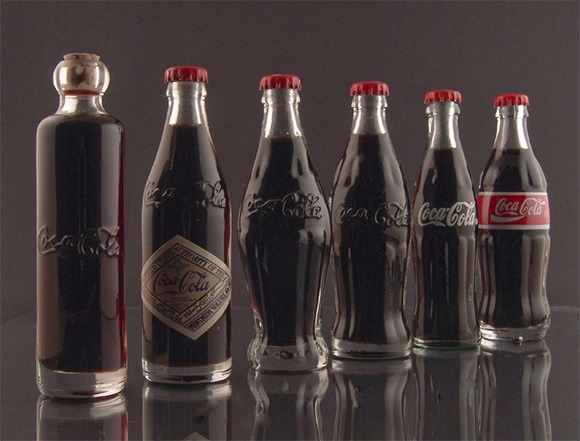
When the New Year begins, it starts with 18th century traditions like Auld Lang Syne, reflections of the year past, it’s challenges, accomplishments and it’s triumphs and then day 1 of the year begins with traditions not to be remembered but created anew. The topic of this blog post came from a stop on a drive from Tofino BC to Vancouver this week. The stop was at a chain restaurant in Port Alberni. While waiting for my order, I glanced through the trophy case filled with awards and plaques from community organizations, the head office and other public service foundations extolling the community service, donations and contributions the restaurant had made or done. It was clear that the owners had made active participation in the community a priority and it was laudable.  There was however a problem.

The most up to date award in the case was from 1999 and the earliest 1996. So the esteem that only moments ago I had bestowed on the restaurant vanished as quickly.

  • So for the last 12 years they have done nothing for their community?
  • They felt that 3 years contributions were enough?
  • They are too lazy to change the awards in the case?
  • What happened to them, don’t they care any more?
  • Will my food be safe?

The little restaurant was living in the past. So unless you are a serious Jethro Tull fan there are implications to Living in the Past; even more serious for the IT consultant.

You will have heard me repeat in this blog that a good track record is the consultant’s most important marketing asset. While that is still true I would now offer a modification to that statement.  “A track record that shows progressive and consistent good performance until today is the consultant’s most important marketing asset”. If it doesn’t show that, then it’s just history. My stellar accomplishments as a 8086 assembler programmer in 1978 are hardly market-worthy, nor Lattice C skills nor for that matter C++ skills. People could care less that I’’ve worked with Booch, been a principal study subject at SEI or been first on the beach for HMO/Medicaid systems reform in the US. Why? Because it’s all ancient history…. and you won’t find it on my CV.

“History is more or less bunk. It’s tradition. We don’t want tradition. We want to live in the present and the only history that is worth a tinker’s dam is the history we made today.” – Henry Ford

Like it or not we consult in an industry that changes on a daily basis and every day the rate of change increases. The good news for IT consultants entering the business is that no one has direct experience in any new technology set that is more than a few years old. So the new consultant with a few years of C# experience may be just as hot a programmer as the consultant with 20 years overall and a few years also with C#. Yes experience counts, yes the same design patterns still apply, yes the same design principles still apply but if you are a “mature” consultant don’t  be fooled, the new consultants can buy exactly the same books you did and will be able to apply that knowledge faster with today’s development toolsets.

We need to take great care that we don’t chase every new technology direction but that we do chase and master the ones that are pertinent to our field. Prospective clients look at our CV’s and service propositions the same way I looked at the restaurant’s trophy case. If the last good thing you did was from 1999, it will likely remain the last good thing you will ever do professionally. Beware of living in the past.

Happy New Year!

Posted in Consulting Excellence | 1 Comment

Merry Christmas, Merry X-mas or Happy Holidays for the Consultant

Christmas for many still retains the traditions of yesterday with choirs, hymns and nativity scenes. Yet the workplace is inured with insincere attempts at political correctness to try to not offend others  who share the space but not the practice. It continues to get more complex. I believe that I have worked with people from every religion or belief but now the list extends with “I’m a non-practicing Christian” or “I’m a non-practicing Buddhist” or my newest encounter with someone who told me they were a “non-practicing atheist”. I am still not sure if they were joking or not. I suspect not.  I am also not sure how one determines actions to not offend a non-practicing atheist. The genesis (no political incorrectness intended by the reference, it is not a direct reference to the first book of the Christian bible) of this blog post came when I was invited to the project team’s Holiday Party next week, but I cannot attend. So I went out to buy some high end desserts that could be shared in my absence by the other team members. The confectionary in the nearby Fairmont Hotel in Montreal offers an excellent selection of on-premise made chocolates and cakes for the the season. All beautifully decorated with Christmas trees, Santa Clauses, Nativity Scenes and the like…

What we believe makes us who we are. It forms our value systems, our ethics and morals (or at least when we adhere to the belief). It shows up in our work, our ability to work with others and our relationships with the client and the client’s team, whether we know it or not. So what approach do we take as the consultant? Let’s look at the options and the potential outcomes.


Happy Holidays

Happy Holidays is perhaps the most politically correct view for the season. You can confidently approach anyone, shake their hand and wish them and their families well over the season and new year. Its safe and its generic and its for the most part expected. It does not extend the personal relationship of you and the person you are talking to, it builds a nice safe fence and allows you to be polite. The person receiving the greeting will know nothing more about you at the end of the exchange than at the beginning.


Merry X-Mas

Merry X-mas is perhaps the most unusual greeting. It implies that you are probably a covert Christian but in respect for whatever the person you are talking to, you will leave the word “Christ” from the conversation. It leaves the person unclear about your wishes for them and perhaps wondering about what you really meant.


Merry Christmas

Merry Christmas is clear. You have stated your belief openly and you are wishing the other person the joy of the event that you feel surrounding Christmas. You have let them know something about you, what you believe in and a little better insight into what makes you “tick’. You have declared that one of your tenets of your belief system is that you will be honest. You will disclose something about you that is not on your linkedin page. It is perfectly legitimate in my opinion to have an exchange like this…

“Abdhul, I know you are a devout Muslim and with respect I just wanted to wish you and your family the joy, peace and comfort that I would wish for my own family in our Christmas season”

You can be honest without being offensive. You can be open without recruiting for your team.

One of the greatest relationship builders is for you to openly express respect for other people’s beliefs. Please note I did not say that you had to share the belief but your ability to openly show respect can be a great step forward in building a relationship with the person.

Be open and respectful.

From my family to yours.

May the best you’ve ever seen be the worst you’ll ever see. Merry Christmas everyone!

Ian

PS. yes the cake will have Christmas Tree’s on it.

Posted in Consulting Excellence | Tagged | 1 Comment