Join the Systems Consultant Resource Union

logo

I recently moved to the left coast of Canada. Some say I was a staunch conservative supporter for every year since my 18th birthday and eligible to vote. It is not true. I was a staunch conservative since early childhood after hearing my father’s lecture on the evils of liberalism after my older 18 year old sister pounded an NDP campaign sign into our front lawn. This year I was somewhat chagrined, after moving to Vancouver, to determine that the most common response to any question including the word Tory was “a what?”. That’s correct… the left coast includes political choices of left or really left only. The Tories are unheard of. Hence, trying to fit in… my new left coast venture … the

Systems Consultant Resource Union

The Systems Consultant Resource Union (SCRU) will represent the interests of IT workers in every imaginable IT consulting occupation from coast to coast to coast. We will advocate on behalf of all working IT consultants in many different ways – from organizing campaigns and rallies to lobbying federal politicians in Parliament to speaking out in the media and to business on key issues to representing Canada’s IT consultant’s labour movement internationally to developing partnerships with the community and other supportive groups. Our goals are simple – what we wish for ourselves we desire for all. That includes decent wages, healthy and safe workplaces, fair labour laws, equality rights, dignity in retirement, a sustainable environment and respect for basic human rights – here in Canada and around the world. We believe that IT unions are a positive force for democratic social change – and that by working together we can improve Canada for everyone. SCRU is not only dedicated to fighting for IT consultant’s  rights at the bargaining table, it’s equally committed to taking on economic, political and social issues that affect its members and their families in the broader community.

Sixty-hour or eighty-hour work weeks with no overtime or comp time, an iPhone hitched to your belt 24/7, mandates from clients who have no clue what you actually do – all for a job that could be outsourced to Bangladesh tomorrow. It is finally time for technology consultants to form a union and demand better working conditions!

After all, if Hollywood writers can organize effectively, you’d think IT consultants would have a shot. As with Teamsters in the transportation industry, when IT consultants walk off the job, everything comes to a grinding halt. Just see if your ATM card still works 24 hours after we walk off the job!

Our demands are not unreasonable.

Our compensation needs to be sufficient to include:

  • a lease payment for a decent model of Lexus
  • a respectable condo in a downtown location not more than 15 minutes commute
  • a nanny for the kids
  • before school, private school and after school care
  • a twice-a-year “quality time” vacation at an all-inclusive tropical resort with special “we watch the rug rats while you play” programs
  • free iPad, iPhone and all-you-can-download  iTunes with 3G subscription
  • all divorce, legal and palimony costs incurred

Whoa… stop! I am getting carried away with this left coast thing. Yes …. reality check ….ultimately it is your value that drives whether you get the Lexus, the waterfront condo and whether you can build a life that is truly excellent eschewing the ‘pretend your kids aren’t there vacations” and iToys. (WP7 is better by the way)

Sorry, there is no SCRU. Just you and the value you deliver every single day. I guess I’ll have to be the sole Tory in BC for now.

* above rhetoric courtesy of the Canadian Labour Congress and the CAW web sites slightly edited

Posted in Consulting Excellence | 1 Comment

What the bookies knew and didn’t know that consultants should still learn from today …

alifore2

I recently saw a presentation from Dr. Donald Sull author of The Upside of Turbulence: Seizing Opportunity in an Uncertain World and a professor at the London Business School. He recounted the story of the famous match between world heavyweight champion George Foreman against former world champion and challenger Muhammad Ali in 1974. The bookies at the time were giving 6:1 odds for a Foreman win. Foreman wasn’t agile, he wasn’t fast but he had the ability to absorb any punch. His previous opponents could pummel him but he could take the punches until the time was right and he would knock out his opponent with sheer brute strength. Ali on the other hand was agile. He was fast, he moved like lightening.

What the bookies knew was that agility was good but you also needed the ability to absorb the punches to win the fight. Sull postulates that both of these are required for companies to be successful in today’s turbulent world. We can learn something from this. I would contend that it is the same combination of both of these factors that allow the best consultants to be successful in a turbulent project.

Consulting Agility

I won’t repeat my blog post here that was entitled Versatile Consulting. The purpose of that post was to talk about versatility and agility in consulting. The ability to apply the skills that you have across many areas of the engagement and the willingness to  be agile in the use of those skills.

Consulting Absorption

The skill or perhaps more accurately named “trait” that is less talked about is the endurance to see a project through even when you are taking a few “punches”.

I was called in to review a project that was in trouble. It had missed some major deliverables and key personnel were bailing from the project after seeing the proverbial “writing on the wall” signs of project trouble.  My arrival was not greeted with great enthusiasm after weeks of receiving critical “seagull” audit reports (fly-in, poop all over, fly-out). The embattled remaining team members had become rightfully suspicious of another head office person who was “here to help you!”  The thing I first noticed in the project was that the remaining team was deeply and personally invested in the project’s success. Yes, there were mistakes made but the team had made a commitment to stick with it, correct the mistakes and despite the “punches” would keep standing there adamant that the project would succeed. It did.

The architects and PM’s absorbed punches from the client, even when the decisions they made were good ones. They took punches from their PMO, their HQ bosses, the Client Sales representative and their family members. Yet they decided to stand and to not throw in the towel. There is no perfect project(ok some are very close… I’ll give that one to Casey and Rebecca et al for near perfect execution) so one of the important capabilities to develop for turbulent times is the ability to absorb the punches.

The four keys to being able to absorb the punch are:

  • expect the punch. Keep track of the high risk items, know what will happen if it occurs and have a plan. (ie. loss of your key resources)
  • don’t take it personally. When things have gone wrong, expect the punch.  If you are the lead consultant, PM or most visible consultant expect it to be aimed at you. You are the proxy and an available channel to vent some client and/or corporate frustration but remember it’s really not aimed at you personally.
  • don’t hit back. This may seem obvious but I have seen consultants react to negative feedback/actions from a client by trying to punch back directly blaming the client for the problem or worse yet escalating it in the client’s organization that the client has caused the issue. Both of these errant reactions are fatal.
  • don’t ignore it. Separate the reaction from the causal issue and focus on talking through the issue with the puncher. It helps move the process forward, de-personalizes it and a person focused on issue resolution isn’t one that is focused on planning the next punch.

It is the combination of agility and absorption that according to Dr. Sull make the best ingredients for companies to take advantage of the turbulence in the market and succeed. A turbulent project can be thought of as a microcosm of the same. Agility in the turbulent project allows consultants to optimize the use of their skills by applying the skill set where and how it is needed the most.  Absorption in the turbulent project is the ability to take a few punches without being knocked out and the ability to stay in the ring and see the project through to successful conclusion.

Agility and Absorption

What the bookies didn’t know was that for many months prior to the fight Ali’s trainers scoured the cities looking for the biggest, toughest, hardest hitting sparring partners to work with Ali with one special rule. Ali was never allowed to hit back. He trained himself and his body to absorb the punishing blows so that he had both agility and the absorption which gave him the greatest win ever in boxing history. Ali-Foreman 1974  We can perhaps learn from that too.

Posted in Consulting Excellence | Tagged , , | 1 Comment

When you don’t sell the engagement, someone else does…

turned

There’s a services salesperson who shows up at a cabin where some consultants have gathered to hunt bear.  Only the salesperson shows up without a gun.

The other hunters are very curious. “How are you going  to get a bear without a gun?” they ask.

“Do you have a knife?”

“No,” says the salesperson.

“Do you have a club?”

“No,” says the salesperson.

“Don’t you worry. I’m going to get a bear. Just wait right here and see.”

The salesperson  leaves the cabin and disappears into the hills for several hours.

Eventually the salesperson happens upon a bear asleep in its den and the salesperson kicks the bear and gets it really angry. As the bear wakes up, it starts to chase after the salesperson, so the salesperson starts running back towards the cabin.

Finally the hunters hear the salesperson running down the hill and yelling, “Open the cabin door! Open the door!”

They open the door and the salesperson runs into the cabin and holds the door open. An angry bear follows close behind, running into the cabin, too.  Then the salesperson steps outside, slams the door shut, and says, “You finish that one. I’ll go get another.”

________________________________________________

It is a pattern of behaviour that has worked well for the salesperson’s commission  in hunting consulting engagements . Talk to the client, get them all riled up, sign the contract and then step outside leaving it to the consultant to deal with. Some consulting companies fail to engage the consultant in the business development process which means the following must be true for the consultant to be successful.

  • The salesperson must have diagnosed the problem correctly.
  • The salesperson must have correctly identified your capabilities to provide the service.
  • The salesperson must have correctly communicated to you the problem and the nature of the expertise required.
  • The client must have thought through and accepted the potential consequences of defining the problem and service either by themselves or with the salesperson only.

In short, not very likely these are all true.

bearack-obama

So how do you get the engagement to both start and finish well with a satisfied client?

In my blog  post A double cheese burger, extra large fries, and a small diet Coke I described the importance of two very critical steps in the consulting process.

The Entry Stage  where you develop and agree to a stable, balanced and workable set of arrangements with the client that provides  clarity about how you are going to work together and the process to get to the end.

and

The Diagnosis Stage where the aim is to identify the real problem. In other words, the source of your client’s problems not just some of the effects of the real problem. Most importantly to make sure your client or the salesperson has not incorrectly identified the problem.

So yes it is important to validate or revalidate what has been sold by the services salesperson. It doesn’t have to be a long process but it is critical to ensure that you have a full and complete understanding and are engaging to solve the real issue. If you miss the diagnosis stage, sometimes you will be lucky but more often than not the engagement won’t be exactly what the client actually needs and you’ll end up with an angry bear to deal with.

Re-diagnose every time.

Posted in Consulting Excellence | Tagged , | 1 Comment

When you’re right and the question isn’t…

hereitis

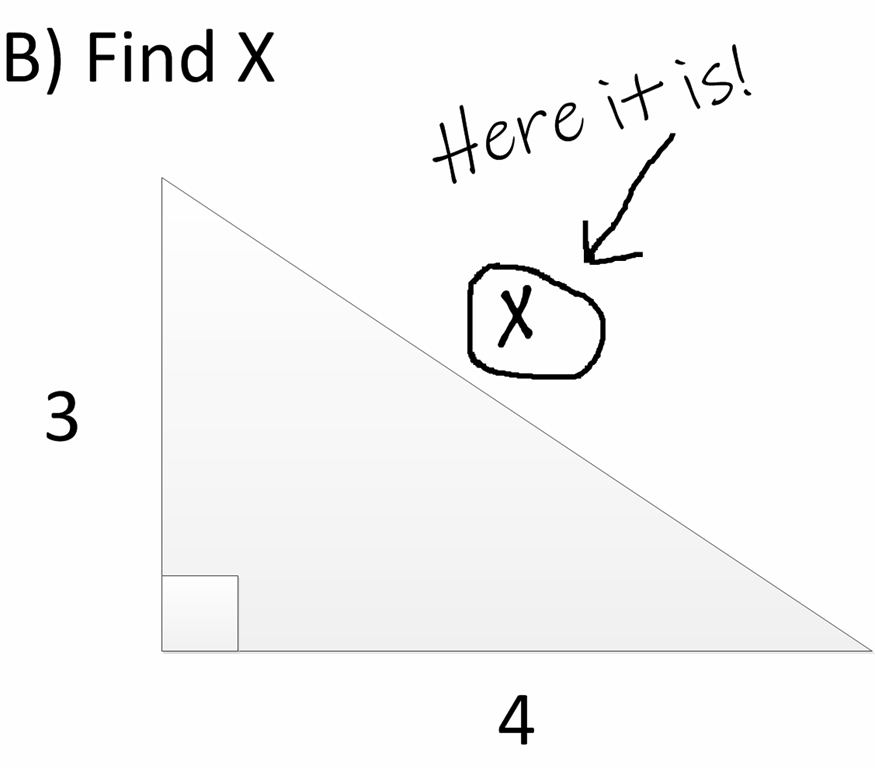
Think back now to elementary school, probably Grade 6. You learned about a guy named Pythagoras who was of course, the inventor of Grade 6 math homework. When the teacher asks the students to “Find X”, they can all do it. Solving for X is a little more complex for a Grade 6’er. (a2+b2=cif you need a reminder) The answer provided to the question in the above picture is not wrong, it is just not the answer the asker of the question wanted.  Clients can ask questions where they clearly understand the question and the context of the question, but the consultant does not. It is however our responsibility to ensure that we fully understood the question our client asked. We do that by asking more questions. (See my blog  post on The Great Questions)

  • Client          Q> Can you build a deployment plan for me?
  • Consultant A>  Yes I sure can!

So was the question really just an interrogatory determining if the consultant has the requisite skills to build a deployment plan?  (perhaps)

Or perhaps it needs some clarification.

  • For which deployment?
  • For what date do you need it?
  • What is the level of granularity (hours, days, weeks, months?)
  • What is the expected level of accuracy?
  • How would you like it resourced?
  • Do you want it conservative or aggressive, what are business objectives for the plan?
  • Best Practice or bespoke?
  • Who is the plan for?
  • What would you like to see included or precluded from the plan? etc.

Issues in the client/consulting relationship can be caused simply by the consultant  not asking enough questions to thoroughly understand the context that is already clear to the client. If you don’t ask enough questions you will occasionally provide a perfectly valid answer to the wrong question. 

So how do you know that you really understand the question?  Understanding is dramatically different than just knowledge. We have all heard pithy appellations like “first seek to understand” but that doesn’t go near far enough. As consultants we must be sure that we understand. What does that mean?

“In order to test one’s understanding it is necessary to present a question that forces the individual to demonstrate the possession of a model, derived from observable examples of that model’s production or potential production (in the case that such a model did not exist beforehand). Rote memorization can present an illusion of understanding, however when other questions are presented with modified attributes within the query, the individual cannot create a solution due to a lack of a deeper representation of reality.” – Rostislav Persion

So to summarize… demonstrate observable examples and who better to judge than the client themselves.

So what I hear you would like is a granular (say to the day level) deployment plan for the ESB project delivered by monday that shows both external and your resources in the plan. It should be based on industry best practices but perhaps tempered a bit on task estimates to be achievable without being taxing and within a 30% accuracy at draft.  You want every material step included.  It should be in MS Project and  powerpoint summary for your review and we should do a walk-through on Tuesday. Is that about right?”

Find X. Make sure you understand the question.

Posted in Consulting Excellence | Tagged , | 2 Comments

Even the Odds in your Consulting Contract– Tips for the Client

2870

For the most part I write this blog to assist consultants to achieve the highest standards and best results possible in their profession. However I also feel great empathy for clients who accidentally engage a predatory consulting firm and even some empathy for those who do it knowingly. First of all, the predator does this all the time, breakfast, lunch and dinner every day. The client may only occasionally engage consulting firms and has yet to hone the necessary survival instincts to not be a main course dinner. Many of these feasts have unhappy endings.

“inadequate planning, ineffective design, and poor communication with users had produced a high-cost, incomplete system that did not meet the needs …” (go ahead and search for the text on BING.com (if you wish)

“signed a $180 million contract …was followed by a $32 million contract… cost eventually rose to $284 million. Employees experienced problems with the system and considered it cumbersome. At one point, it was down for 16 days.”

“made their money and left … the taxpayers o­n the hook for their outdated system. …expensive, inflexible, out of date  and cannot be modified to support future operations”. Somebody sold the government a pig in the poke, and left laughing all the way to the bank. That somebody was ..”

The stories continue to appear unabated.

The number one reason for overruns is lack of clarity in requirements, either technical or functional. This followed in close second by breakdowns in communication which drive issues with politics, collaboration and adoption. Coming in third and perhaps the most surprising is consultant resource availability, productivity and skill, the very reasons the client hired the firm in the first place.

So how do you even the odds?

Requirements.
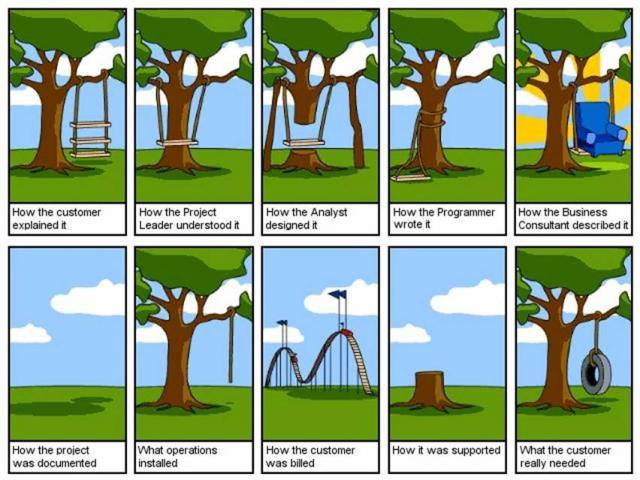
requirements

There are 7 solid tests of requirements. They are:

  • Stability – degree to which the requirements are changing and the possible effect changing requirements and external interfaces will have on the quality, functionality, schedule, design, integration, and testing of the product being built.
  • Completeness – Missing or incompletely specified requirements, requirements that are not specified adequately to develop acceptance criteria, or inadvertently omitted requirements.
  • Clarity – ambiguously or imprecisely written requirements
  • Validity – requirements that do not reflect client’s intentions for the product, misunderstandings of the written requirements, unwritten client expectations or requirements
  • Feasibility – difficulty of implementing a single technical or operational requirement, or of simultaneously meeting conflicting requirements. Also included is the ability to determine an adequate qualification method for demonstration that the system satisfies the requirement.
  • Precedent – any capabilities that have not been successfully implemented in any existing systems or are beyond the experience of program personnel
  • Scale – technical and management challenges including scheduling and response requirements, complexity of system integration, component dependencies  and impact due to changes in requirements.

You even the odds by being realistic about the current state and treating stable, complete, clear, valid, feasible requirements under a statement of work that isolates as many of these components from ones that are not. In most projects more than 60% of the requirements will fit this category and then there are the… other ones.

Sorry folks but you can’t fix price contract variable requirements. That’s just a fact. You can however limit your exposure to a runaway, with strong change control procedures and perhaps most importantly productivity warranties.  The biggest and oldest game in town for predatory consultants is to deep dive into the never-ending requirements analysis pool.  Timebox activities, set aside budget for change control  and keep control of the process. Offer incentives for timely completion and incentives for NON-USE of the change control budget. As an example, the consulting firm and the client work on elaborating requirements for a specific area. It was timeboxed at 50 person-months effort. 25 person-months was set-aside for change control and a cash-bonus of 50% of the pool was set-aside for hours not used.

Assume $25,000 / month / person. Initial requirements cost is  $1.25 Million.  $625K has been set-aside for change control.

Let’s assume the consulting firm is running at 30% Gross Margin.  The profit on $625K  would be $187.5K if they maxed out the change control.  The bonus for not using the change control budget would be $312.5K. You will complete it faster for $312.5K less  by setting up the contract correctly on the areas with weaker requirements where you can even the odds.


Communications

megaphone-girl

Communicate it all, communicate it now and communicate it to everyone including every member of the consulting firm. It is the only way to even the odds. Good PM’s know to keep communications logs but that is not what I am talking about. It is not just the contractual to and fro that needs to be communicated and logged. It’s everything!  Every change gets a CR no matter how small, every change gets its day in court (Configuration Control Board) and every resource on the team gets a copy of the change log on a daily basis with a note that says…. it is your personal responsibility to reply-all if any of these changes effects your workstream and it is not noted on the CR with an appropriate budget modification.

Yes, the amount of time spent each day (it could be 10%) on communication will seem high, but the consequences on not doing it are far beyond the 10% investment to do it. If you hide something from the team, expect to pay dearly for it.


Resource Productivity

lazy

Not all productivity lapses are as obvious as setting up a hammock on the office front lawn. There are actually 6 common dimensions to this potential problem.

  • doing a lot of work that isn’t useful
  • doing the work slowly
  • doing the work with insufficient skill to be proficient or to turn out a quality deliverable
  • not doing the work at all
  • managing other people that don’t work either

               or my personal favourite

  • being conference room furniture (CRF)

I was working with a large systems integrator with a 3 letter moniker and we had scheduled a requirements review meeting for a functional area. 22 people from the integrator attended. (all billing)

  • 4 domain analysts
  • 8 business analysts
  • 4 application analysts
  • 2 functional analysts
  • 2 project managers
  • 1 architect (application)
  • 1 Program manager

The only thing missing was the partridge in a pear tree. So I started the meeting like this. “Ok if everyone could introduce themselves and state your role on the project and your role in this meeting and your deliverables from it …”

Panic ensued…none of them knew why they were there. Personally I like the smallest team possible with the highest calibre people and pay them well. I know people don’t use the term “conference room furniture” on their CV, but some of them really should. Clients need to be able to recognize furniture when they see it and not pay for it.

How do you even the odds.

#1 – Build a detailed and granular*  plan   and base it on accepted standards like the 16hr/FP metric (see my blog Art of Estimating a New Project) * (granular means no higher than 8 hours per resource. If you plan an 800 hour task it is NOT controllable.)

#2 – Fire any PM immediately that suggests a duration based plan can manage a project.

#3 – Time gets entered daily against  the plan with a minimum of 2 numbers:

  • todays effort against the task
  • time remaining to complete the task (ETC)

#4 – No one gets paid a dime if it was not logged in the master plan

#5 – Hire a full time Project Coordinator that tracks individual productivity against plan and

#6 – have a “3 strikes and you’re out” clause written into your contract with the firm or at a minimum “3 strikes and we don’t pay again until the productivity comes into range”.

Be tough, be fair but above all be vigilant. The  #4 reason reason for runaway project costs is lack of adult supervision.


Even the Odds…

Posted in Consulting Excellence | 1 Comment

Keep your sense of humour…

Maureen (Mo) Hutchinson-Parker and John Parker are the proprietors of the Northern Lights motel in Wawa Ontario. I met Mo and John in 2000 when I started a  snowmobile adventure tour company (as a hobby…it’s a long story) and selected the Northern Lights as a stop on our tour.

P0000807a

Despite the economic trials of Northern Ontario since then, the NL Motel has prospered.  “Since we purchased this place, 14 Motels have closed from Wawa to Sault Ste Marie, and 5 towns north of us have all lost their only Hotels.  But, our guests seem happy that we aren’t smart enough to Bail like the rest of them. Haha We won an Amazing Hotel Award!” appears on their website 11 years after they purchased the motel. They are doing something very, very right.

This summer on a cross-canada trek to move from Ontario to BC, we had the pleasure of staying yet again at the NL. The rooms would put Conrad Hilton’s properties to shame for their cleanliness, but what makes the NL a must-stay is the personal and humourous touches in the rooms and the true graciousness of the hosts.

bear1

In the rooms you will find jokes on the bathroom walls, hair elastics on the mirror, photos of foxes sharing the wonders of snow removal and sarcastic stuffed bear heads (yay for the nature lovers) among the trophies in the breakfast room. In short, it’s a delight.  No it’s not a Fairmont, no it’s only view is of Highway 17 but year after year the patrons return because it is simply delightful to stay with Mo and John.

PC230009

As consultants, we can learn from Mo and John.

If the motel was just brilliantly maintained, I wonder if it would still be around. It’s not the maintenance that does it, that just makes it equivalent to a Fairmont, Westin or Hilton. It’s the little things, the funny things that make it enjoyable and  that make it worth the extra 2 hour drive instead of stopping in Sault Ste. Marie.

Now I am not saying that you have to be a comedy-writer to keep your client engaged, but there is no harm in a little levity once in a while.( Only a leader as long as people follow shows my bunnier side)

Lighten-up, be engaging and every once in a while crack a joke. Your client will appreciate it.

Posted in Consulting Excellence | 3 Comments

Gaining Accountability and Ownership in the Client’s Team

bear

One of the main reasons that client’s engage us is our knowledge and expertise in a subject matter area. We may perform brilliantly and complete the assigned work and yet the client may feel the work is not truly complete until “knowledge transfer” (KT) has occurred.

KT is a funny thing. It’s always desired, chronically underfunded and expectations are difficult to set early and impossible to set late.

“Before you leave, please transfer the sum total of all your knowledge to every member of my staff during your last four hours on Friday. I want each member of my team to be able to do everything that you do, as well as you do so that we will not have to engage another consultant in this area ever again.”

If you were writing a Use Case for Knowledge Transfer you would start with defining the Pre-Conditions. It would read something like this.

– The team members desire knowledge transfer

– The team members will commit sufficient time and effort (active participation) to knowledge transfer

– The team members are at a technical level of proficiency where knowledge transfer can be done as an increment to the foundational knowledge they already have

– There is sufficient time and budget to complete the knowledge transfer activity including the preparation of materials to complete it

– There is a mechanism in place (test?) to ensure that foundational knowledge is at the right level prior to knowledge transfer.

– There is a mechanism in place (test?) to ensure that knowledge transfer was successful after the activity

– The team members will “get it”.

This is why KT is such a tricky area and why it is critical to set realistic expectations with your client right up front. In 25+ years of consulting, I have never seen the above pre-conditions all met before a KT exercise is undertaken.

At the end of an engagement you are effectively transferring ownership for the area in question to the client’s resources. You are also doing it with less-than-perfect knowledge transfer and subsequently should not be surprised when the client team rejects the concept of being held accountable for future results.

So what’s the best way to deal with the resistance to adopt the new ownership responsibilities?

First of all you need to influence (please see my blog on  Mastering the Art of Influence )  your client that ownership and accountability is a process not an event that occurs 60 seconds after you walk out the door. It should progress from none to limited to moderate to full accountability over time and you should pre-define with your client what the checkpoints are at each stage to move on to the next. Eventually, the client’s team will be fully accountable and the process to get there should be communicated and discussed by the client and you with the client’s team to make sure they understand they are not on the hook day one.

The best way to gain accountability and ownership in the client’s team is to set expectations in advance that knowledge transfer will be incomplete,  that time is required in role and doing new activities before true ownership can take place and to discuss what (if any) role you may have on a “phone-a-friend” basis to support the team members while they take on progressively more responsibility over time. No one wants to be responsible without the self-confidence to do the job and it takes some time to gain that confidence.

“When it comes to privacy and accountability, people always demand the former for themselves and the latter for everyone else.” – David Brin

It’s your job to temper that view a bit….

Posted in Consulting Excellence | 1 Comment

You know you’ve been a consultant for too long when…

Image22

1. You refer to your cousin’s new baby as a deliverable.

2. You no longer need a website to tell you the airline schedule and flight numbers.

3. You have enough little white ID badges that you can open any office building in the country.

4. You know all the late night security guards at the clients sites on a first name basis

5. You feel unbalanced without a laptop bag hanging from your shoulder

6. You go to a grocery store and immediately walk to the front of the line at the checkout knowing you’re “Platinum”

7. You start thinking that life in Canadian Armed Forces would give you more time at home

8. You buy a netbook PC just so you can work on the plane when the guy in front of you reclines his chair.

9. You are upset when you come home on Friday night and the lights aren’t on, the bed isn’t turned down, there are no mints on your pillow and you can’t find the mini-bar.

10. “Vacationing” is spending an entire weekend in your own home

11. You try calling room service or leaving a wake-up call from your home phone

12. You have seen more movies at 40,000 feet than you have at Cineplex.

13. You automatically remove your shoes, belt and empty all metal objects from your pockets when entering a friend’s house.

14. You go to a family wedding and tell the Bride she really should have asked for an upgrade.

15. You forget to put gas in your own car because you know they always fill it before they give it to you.

16. Your significant other flies to your hotel for the weekend

17. You have a panic attack when your smartphone won’t boot.

18. You write a workplan for your weekends

19. Someone asks you what you do for a living, and you can’t answer the question

20. Before starting the car, you insist on telling everyone where the emergency exits are and how to release the seat belt buckle in 2 or more languages.

21. You’ve been staying in the same hotel, you instinctively call it “home”

22. You are actually thinking of sending Christmas emails this year with your postal address set to the Fairmont Hotel.

23. You wake up at night from a terrorizing nightmare… you were given a middle seat behind a bulkhead!

24. You realize the hotel staff are your closest friends

25. The biggest joke is Airline miles. You accumulate many hundreds of thousands but shudder at the thought of using them.

Posted in Musing | Leave a comment

When is it time to leave?

cornered


The longest project I participated in was 4.5 years long. I started on the project a number of months after it was initiated and led the project team for the next 3.5 years.  In 3.5 years a lot of things happened:

  • people got married
  • people messed around
  • people got divorced
  • babies were made
  • people got chronically ill
  • people died
  • people got promoted
  • people got fired
  • people got arrested, convicted and jailed and
  • (oh yeah, we built a big system).

Lives, relationships and people changed through the passage of time and events that happened.   Long term projects are not the slightest bit immune to forces that come to bear on our society  and in fact may amplify them.   The cartoon above I borrowed from the Globe and Mail newspaper on Nov. 2nd.  The caption reads “The contract is very clear, you’re free to go once the project’s completed”. Fortunately slavery was abolished some time ago and we can now choose whether we continue in role or find alternate engagement. The cartoon does however reflect a common misconception that locking someone in for the duration is the preferred solution. I am not so certain.

A consultant with a resume that shows daisy-chained 30 day contracts on big projects is immediately suspected by a prospective employer as either a fraud (it took 30 days for them to figure out the consultant didn’t know anything) or a jumper (work wasn’t to the consultant’s liking so they bailed). The other extreme is the consultant that signs up for the long haul multi-year projects. Its impact on your resume is also not without danger. If that’s you, you will do most of your work in targeted areas, but big projects have ebbs and flows and you may get some tasks that are in other areas. We can call these “off-strategy” or your choice of a four letter colloquial term that is more colorful (_ _ _ _ jobs).  The challenge with long term projects for the consultant is delivering high value to your client every single day. You are not an employee, your only value is the value you bring to your client on a daily basis. So to answer the question that is the title of this blog, one answer is certain:

When is it time to leave?

It is time to leave when the value you are contributing to the client falls below their definition of excellent value for the money invested in you.

If you are delivering on tasks that are below your capability, that you know the client can find alternate (and cheaper) resources to do the tasks, it’s time to move on. Your client may want you to stay, but ultimately it will end badly. Sooner or later the client will look at the value and be disappointed in their investment. Consuming available budget is not the goal  ( I make no apologies to time-sheet stuffing consulting firms), delivering value is. (See my blog on just because you are necessary does that make you valuable?)

This almost never happens on short projects, as the mandates are precise, deliverables clear and expectations are set appropriately. On the mega-project, things change.(see above) The dynamics will always cause peaks and valleys as dependent tasks exert control on schedules and assignments. Constant vigilance on your delivered value will ensure that your clients are always satisfied and that your track record proclaims only high value work. Bottom line is if you’re a premium consultant you simply can’t be caught up doing the commodity jobs. Sure, chip in to be a team player once in a while but on an on-going basis, you will make yourself a commodity player and it will be fatal to your client relationship and impair your track record.

Put yourself in a customer position for the moment. Imagine you have hired a master carpenter to build a new mantle for your living room fireplace. He charges $150 an hour for his time.  One day you have a new carpet installed in the living room and you come home to find the master carpenter vacuuming the bedrooms of your house.  His reply “The installer’s were in the way, so I couldn’t work, so I thought Hey since you’re paying me… I’ll do the carpets”

Now there are two ways you can react to that.

  • Hey what a cool guy!    or
  • Hey I just paid him $600 to vacuum my carpets! What’s with that?

What’s your reaction? If you respond like me it would be:

  • I am not paying you for that
  • If you couldn’t do the work I expected, you should have told me
  • I‘ve got other tasks around here I could have used your skills on that are better suited
  • Please just go back to the shop and work on something else until they are done

So if on a long term project you find yourself about to proverbially “vacuum the carpets”,  you need to have a discussion with your client about it. It’s time to leave.

DSC_4793bw

Posted in Consulting Excellence | 1 Comment

Keeping the Vision is Harder than Creating It.

bichon_ball

Have you ever spent time with a new puppy? Throw it a ball and it will chase it instinctively. Throw a different ball now and  it will lose interest in the first and chase the second. You can amuse yourself for minutes watching the pup zoom all over the place in search of the next speeding ball. When you create a project or architecture vision, it’s like that first ball. You lob it into the air… and then more balls will start flying in from other directions.  Some of the people who were quiet during the development of the vision will suddenly find their voice and alternate ideas once the cement trucks arrive to lay down the foundation for the new system. While the foundation may support the new suggested changes, should you allow it or should you protect the original vision and guard against disruptive change?

I believe the answer is Yes. Yes you should allow it and Yes you should protect the vision against disruptive change.

Every general contractor in the world who does private residential builds would reply the same way to the following question. “What’s your biggest challenge?” The “Homeowner” would be the ubiquitous reply I am sure. The architect has drawn the plans, the foundation is in, the frame up and the homeowner decides the kitchen is just too small and it needs to grow by 100%. Good GC’s know this happens on every build to some extent and plan for it with a specified budget, included in the costs and the schedule. We can and should emulate that approach.

Yes we have a project or architecture vision but we should also anticipate and budget for unexpected change.

Now a little later in the cycle the homeowner decides that the master bedroom really needs a walkout deck and a giant patio door on the exterior wall. “I’m sorry, but that’s a load bearing wall and we can’t do that” is an acceptable response to the client. They understand what can’t change if there is a good reason.

Yes we have an architecture or project vision and yes we need to protect the structure that makes the entire solution deliverable within the constraints established by our client. (Normally time, money and risk are near the top of the list)

Now the last part of the situation is where the balls that are being thrown don’t ever seem to stop. That’s not ideas or change, that’s just a mischievous dog owner who takes pleasure in watching the pup exhaust itself. If so, it’s time for it/you to take a break or learn how to bark.

BijouChairs

Posted in Consulting Excellence | 2 Comments