Why is Enterprise Architecture failing?

togf

First of all I am not talking about the chief architect, application architect, solution architect or technical architects. These are well-defined roles that have specific deliverables and have been in existence for many, many years. The EA however is a relatively new animal.

Here’s one definition I found…

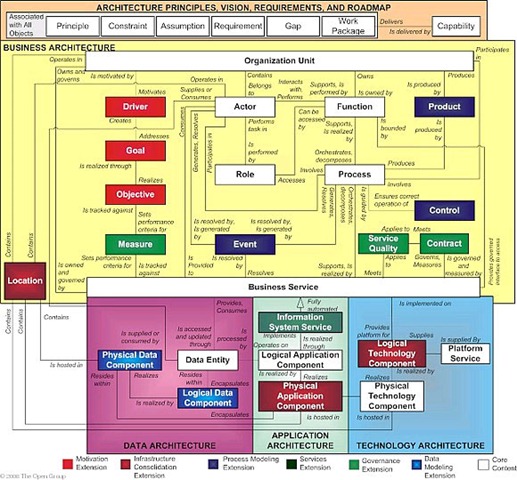
“The Enterprise Architect ensures alignment between the business and IT strategies, operating model, guiding principles, and the software development projects and service delivery. By taking a global, enterprise-wide, perspective across all the business services, business processes, information, applications and technology, the EA ensures the enterprise goals and objectives are addressed in a holistic way across all the application development projects and their deployment into production.”

or perhaps Gartner’s will define it better

gartner

or perhaps not.

The joke is now old. “What is the difference between an Enterprise Architect and a Janitor? If a janitor stops working for  a month, someone will notice…” and unfortunately true sometimes. If we asked Gartner, here is what they would tell you.

The 10 EA pitfalls identified by Gartner are:

  • Insufficient stakeholder understanding and support
  • Not engaging the businesspeople
  • Doing only technical domain-level architecture
  • Doing current-state EA first
  • The EA group does most of the architecting
  • Not measuring and not communicating the impact
  • Architecting the ‘boxes’ only
  • Not establishing effective EA governance early
  •  Not spending enough time on communications
  • The wrong person in the job.

If you have worked for an IT vendor, you will recognize the following personality. The high-strung, AAA golf-club swinging, Porsche-driving, Rolex-wearing person that makes sales quota every single year. Good for them. One of them I met in the early 1990’s left the computer industry and went on to form an ISO 9000 training company. Completely perplexed I asked “Jimmy.. what do you know about ISO 9000?” The answer, “Not a damn thing… but that’s where the big money is!”  He saw coming trend, caught the wave and without a shred of knowledge sold-out training courses on the crush to become ISO 9000 certified because everyone knew that you couldn’t be in business without it… (hmmm)

Today I believe EA’s are a bit like ISO 9000 certification. Gartner tells people they should have one, so without even being able to define what it is, they place an advertisement for a TOGAF certified architect. 12 months later, they have some diagrams that few understand and no one can execute against. Then they hire another one …

My list of why EA is failing shortens from Gartner’s 10 to 2.

  • The wrong person
  • No Value Realization Plan before the role is even hired

I have seen 3 types of EA’s in my travels.

  • EA’s that know the business, know technology and have enough technical expertise to know the difference between a dream and a plan
  • EA’s that know the business, but lack core IT skills but have taken and passed a 4-day TOGAF course.
  • EA’s that have core IT skill, little business knowledge but lack the “Big Picture” and soft skills (and have likely taken and passed the same 4-day TOGAF course)

In my opinion only the person with both business (domain specific) and technical knowledge with enough true IT experience to know that there is difference between nice diagrams on a page and actual pragmatic implementation is a viable EA.  The right person will also not let the other 9 items on Gartner’s pitfall list happen.

Just as big a problem as hiring the wrong person is not knowing explicitly what value you expect from the investment.

If EA is done well.

  • Your IT operational and maintenance costs will decline $
  • Your business will be more productive $
  • Your business will be more agile and able to respond quickly to change $
  • You will make better decisions with better information $
  • You will be able to show direct value from IT investments for revenue enhancement or cost reduction $
  • IT will spend less time on maintaining systems and more time producing new capabilities and innovating competitive advantage $
  • IT will become a weapon not a cost center for your business $

Missing from this list are platitudes like “better alignment with business strategy”. While necessary, it is not a monetizable value statement.

If the EA and EA program are established to drive specific value to the enterprise with hard numbers, then there is less tolerance for deliverables with nice diagrams that are improbable to implement. Only by hiring the right person and before hiring, setting the value expectations of the program, can the EA program deliver true success.

Do this and you will definitely notice to your detriment if the Enterprise Architect took a month off.

Where’s Jimmy now? Probably selling TOGAF courses….

Posted in Consulting Excellence | Tagged , , , | 2 Comments

Disposable Software – What happened to the idea?

In the early 1990’s end-user software development tools had become so sophisticated there was a rumor afoot that all software would soon become disposable. I am of course talking about tools like Access, Excel, Lotus Notes etc. that allowed a Power-User to create quick, built-for-purpose “disposable” applications. Use them and then throw them away. In the last year I have met with 6 major Canadian enterprises that each have more than 30,000 end-user developed business critical applications. They were intended to be cheap, useful point solutions that would “do” until a real system came around… and of course that replacement enterprise solution never did show up.

clip_image001

Come on .. no one’s running a video camera and going to report you to the Green Police, admit it. You love paper plates don’t you? No washing required after dinner, no electricity to burn, no toxic soaps to flush, no dishwasher to empty, no cupboard to fill. Use it and toss it in the recycling bin. It may not be “Green” but walking right back out into the sunshine after dinner instead of stuffing the dishwasher is a real treat. In the software world we’ve been using paper plate solutions for years and years but instead of using them and tossing them out, we’ve decided to keep them and keep reusing them, letting them get dirtier and dirtier with each use. It’s a pandemic-scale problem.

Now we have the next generation of “disposable” software. Cloud based services.

  • For $X per month you can have Web Meeting service. Don’t like it, switch to another service next month or just dispose of the service. (Live Meeting, WebEx, WebMeeting, LotusLive etc)
  • For $X per month you can have a CRM service. Don’t like it, switch to another service next month or just dispose of the service. (Dynamics On-Line, Salesforce.com, Salesboom, Optima etc.)
  • For $X per month you can have an integrated collaboration environment. Don’t like it, switch to another service next month or just dispose of the service. (Office 365, eRoom, Oracle Open Office etc)
  • For $X per month you can have a full Financial package service. Don’t like it, switch to another service next month or just dispose of the service. (Dynamics, Intact, Oracle, SAP etc.)
  • The list continues…

No, not really. What IT people know is that the cost of acquisition of a solution is a fraction of the actual costs and investment.

  • Set-up and data migration costs
  • Training Costs
  • Support Costs
  • Audit, Compliance, Security
  • Decommissioning costs etc.

to name just a few. These costs are always much more than the cost of acquisition and that means that these solutions are not easily disposed of. SaaS services are about to become the crack-cocaine of the IT world. Why? Any user can put the monthly charge on their Corporate Amex card and start using it. There are:

  • no requirements definition – try it, like it, use it a bit, use it a lot ….
  • no significant capital investment
  • no or minimal contractual obligations
  • no requirement for accurate data – likely keyed in by the end-user with no requirement to match or correlate with corporate systems
  • no need to follow corporate policy – because no one even knows!

Side Note – Last year a group of salespeople were hired into my client’s company. They all had previous experience with Salesforce.com, liked it and liked the iPhone application even more. They imported the customer lists from the Corporate Outlook contacts database and worked for the next year adding to their own group Salesforce.com CRM database. The VP Sales was impressed with the new hires, always able to talk about the pipeline at a moment’s notice. It was a good team, highly successful and they blew away their sales quotas. So successful in fact… that they started their own company. Conveniently, they were the only people with access to their Salesforce.com CRM database and had an excellent asset for their new company. Conversely the new salespeople hired to replace them found that there was little or no information available about many of the company’s current customers, many who were already former customers by the time the found the information.

So like the thousands of Notes applications scattered around the corporation, be prepared for another failure of the disposable application, the cloud application. What makes this one different from a Notes application is you may not even know where to start looking to find it.

Posted in Technology | Tagged , , , , | Leave a comment

Finding that last bit of extra energy to get the job done

image

I am sure that most of us remember University all-nighters before the major exams, pushing ourselves well beyond normally available energy limits to make sure that we did our best. We tapped into an invisible pool of reserve energy and carried on. It pushed through physical, mental and emotional exhaustion, pushed through the fatigue and you succeeded with at least the thought that “thank goodness when I graduate I won’t have to do this again…”. Not true was it?

The nature of consulting is that we are working on a problem area. Very often time sensitive problems and very often where the expectations of the time for resolution have already been set. If you surveyed 100 Professional IT Consultants randomly, I suspect that 90 of them would say that work-life balance was either an issue or a serious issue with them. To a certain extent, it is the nature of the work.

I like the bowl of marbles theory when referring to available and expended energy. The bowl contains marbles representing your daily normally available and reserve energy. As you work hour by hour you take marbles out, add job stress, take a few more marbles out, add family stress, take a few more marbles out, add financial stress, take few more marbles out, add some politics, a few more marbles gone and add some team friction and a few more are gone again.

Pretty soon you’ve lost your marbles. (so to speak)

I think the bowl and the number of marbles is the same despite our age. The difference was that in University it was mostly just time stealing marbles from the bowl, not thoughts of kids, mortgages, car payments, tax installments, securing the next consulting contract or politics.

If you adhere to the bowl theory and you have determined that your energy is finite and does not in fact increase with a Starbuck’s double espresso, then the only way to make more energy available for the “at-work” overtime bursts is to make sure other items aren’t stealing from the bowl as much.

As a consultant, overtime comes with the territory so you need to both expect it, plan for it and have enough energy left to do it well.

Some people scoff at the soft-skills concepts presented for Consulting Excellence. The benefits however are both for your client and for you. By setting and attaining the highest standards you will not only deal with issues, but more importantly you will prevent them.

In my blog post A year later and a little greyer I summarized a year’s worth of CE tips specifically in the area of making it easier for both your client and you. These include:

  • Change Management – cutting down on surprises
  • Client Relationship – getting and keeping CR on an even keel
  • Communication Skills – keeping the channels open
  • Consulting Process – not skipping important steps to reduce risk
  • Consulting Roles – ensuring that you are in the right role
  • Consulting Skills – excelling at the art
  • Contracting – clear, concise, communicated, completed
  • Criticism – giving and getting with professionalism
  • Facilitation – getting collaboration with outcomes
  • Influence – getting to necessary agreement
  • Integrity – keeping it all transparent and understood
  • Internal Skills – dealing with your own colleagues
  • Leadership – leading for results
  • Negotiation – negotiating for success
  • Presentation Skills – making it clear and impactful
  • Problem People – how to mitigate
  • Problem Projects – how to best prevent, recognize and deal with project issues
  • Problem Solving – techniques your client will like and they work
  • Project Management – basics of keeping it on track
  • Questioning Skills – find out more, be better informed and make better decisions
  • Strategic Thinking – helping your client to think outside the box

By reducing errors, preventing problems rather than fixing them you will leave more energy available to be put on project tasks that actually move the project forward instead of spending energy fixing issues that don’t.

The bottom line is that the greater investment you make in Consulting Excellence, the less chance there is that you will lose all your marbles….

image

Posted in Uncategorized | Leave a comment

What’s your GQ?

boardroom2_bzyh

No I am not referring to a subscription to Gentlemen’s Quarterly. Like an IQ or the softer EQ, the GQ is the Governance Quotient. Specifically how much complexity is an organization capable of governing before it falls over and becomes dysfunctional?

Let’s define the boundaries of governance, what it is and what is has:

  • Governance is the decision making processes of an organization
  • Governance is FAST and EFFECTIVE decision making in times of ambiguity
  • Governance is a mechanism to drive and shorten the time leading to accelerated benefits
  • Governance is ensuring adherence to policies, standards & alignment to roadmap
  • Governance has
    • Executive Sponsorship
    • Clear Authority
    • Clearly defined Scope
    • Accountability tied to metrics and governance objectives

Clients/Corporations with high GQ scores can take on a portfolio of large complex IT projects, keep them managed and on-track, make good decisions despite imperfect information and deliver benefits not just technology.

Clients/Corporations with mid-range GQ scores can take on a portfolio of small IT projects, keep some of them managed with only some on-track, make good decisions only if complete information is available and deliver some benefits.

Clients/Corporations with low GQ scores cannot take on a portfolio of projects, one enterprise project is more than enough to make them spin, they do not make good decisions and deliver  technology without the ability to follow through to benefit realization.

Many of us have had the opportunity to meet with the CEO around a mission-critical initiative. Sometimes they ask “what can I do?”. My answer for the lower GQ client’s CEO is the following: “Ask questions … all the time

Ask:

  • Are our investments contributing to our strategic objectives, both individually and collectively, such that we are getting optimal benefits, at an affordable cost, at an acceptable level of risk?
  • Are our IT services, assets and other resources resulting from our investments focused on real business needs and priorities?
  • Are we doing these things the right way? (prove it to me…)
  • Are we leveraging synergies between our investments?
  • Are we getting these things done well?
  • Do we have effective and disciplined management, delivery and change management processes?
  • Do we have competent and available technical and business resources to deliver the required capabilities and the organizational changes required to leverage them?
  • Are services delivered reliably, available when and where required?
  • Are we getting the benefits?
  • Do we have a clear and shared understanding of the expected benefits from new investments, and resulting IT services, assets, and other resources?
  • Do we have clear and accepted accountability and relevant metrics for realizing the benefits?
  • Do we have an effective benefits realization process over the full economic life cycle of our investments to ensure that we are getting

If your executive sponsor is not asking questions, they are not providing any value to governance.

For clients with low GQ’s , what as a consultant do you do?

#1 – Keep it simple.

If your client cannot govern a complex initiative with lots of moving parts, don’t do it. They (and you) will fail.  Keep it simple, reduce the scope, increase the time and get them to work on improving their governance model. One of the first things to achieve in improving governance is getting your client to realize that there is a difference between having the form of governance versus actually having governance. Specifically the importance of not just having the formation of committees but actually having committees that can illustrate FAST and EFFECTIVE decision making in times of ambiguity. Then you are making progress on the GQ.

Posted in Consulting Excellence | Tagged , , | Leave a comment

Everything you need to know about the CLOUD in one short blog post…

image

Everyone is talking about the CLOUD but it is really not a cloud but CLOUDS.

If you want to take an application from your datacenter and have someone else run it you need an IaaS Cloud. Infrastructure as a Service, allows you to take your application, virtualize it (Hyper-V or VmWare) and send it to a datacenter that will rent you piece of a large processing and SAN infrastructure for likely quite a bit less than you are paying today to operate it yourself. As your DC costs continue to rise, the mass-scale IaaS vendor costs will likely continue to drop.(except for power  which is currently 15%-20% of non-cloud TCO)

If you want to buy a ready-made on-line service such as CRM, ERP, Accounting, E-Mail, Video/Audio conferencing, browser-based Office Productivity, Collaboration, Business Intelligence etc. you need an SaaS cloud. Software as a Service, provides on-demand usage, a low monthly fee and near state-of-the-art software all of the time,  internet/VPN accessibility and some abilities to span local and cloud usage options. The TCO of these solutions are always lower than running similar services in-house and the trade-offs may or may not matter to you.

If you want custom developed applications to run external to your datacenter, you need a PaaS Cloud. Platform as a Service allows you to build an application with the usual tools but architect and deploy it to Cloud for both internal or internet usage. This is where there are enormous potential savings. PaaS cloud applications are not like your normal datacenter server applications, nor are the datacenters they run in.  A PaaS datacenter may have 200,000+ servers and Yottabytes of storage.

These datacenters draw up to 100 MegaWatts of power, more than enough to power a city of 100,000 homes. Do the math and at 10 cents per kilowatt hour, the daily electricity bill for one of these datacenters is  $0.10 x 1000 x 24 x 100 = $240,000 per day. That is why these datacenters are not filled with servers from your local computer retailer. The systems are custom built to be low-power consumption “memory and cpu on-a-stick”  for application servers and “processing on a big bus” for database application servers. Note: There are at least 2 distinct types of highly specialized servers in a cloud datacenter. In fact your application may run across multiple datacenters with application services in many and database services in many. That’s exactly why you can’t just take your source code, ship it to the cloud and recompile it to run. Well you can … but it will suck on performance because of network latency. (Also known as the speed of light and it’s really difficult to get around that particular law of physics)

A cloud application must be architected to use the PaaS cloud properly. An example:  It means that where with a standard local server based web application you might be inclined to populate the content of a drop-down box on a screen from a look-up from a database table, you really don’t want that to happen often in the cloud. Applications that are “Chatty” across the network really don’t work well. Fortunately, the cloud platform has great front-end data caching capabilities that allow you to put items like reference tables, look-ups etc. in memory and cached where the application can be lightening fast. But you have to architect it that way. There are great Cloud Design Patterns now available so that new Cloud Applications can be built and deployed with ease. Retrofitting an existing application to run in the cloud… much, much more difficult.

Once you have bought into the concept of PaaS and architecting your applications for the cloud you can then start to look at hybrid scenarios to meet your specialized business requirements. Today’s PaaS like Microsoft Azure provide the ability for hybrid computing. Want your data local? You can do it. Want parts of your application in the cloud and part local, you can do it. But in all cases, the application must be architected for cloud deployment.

Lastly in addition to the IaaS, SaaS and PaaS clouds is the concept of a Private Cloud. When the term Private Cloud is attached to IaaS  it means that in your datacenter, you are following a infrastructure deployment pattern and using mass-scale tools for provisioning and managing your infrastructure.

When the term Private Cloud is attached to SaaS it generally means that a hoster/ISP will host the application as if it where the actual vendor, but will not multi-tenant the application. Ie. It’s yours and yours alone.

When the term Private Cloud is attached to PaaS, it means that you are deploying the infrastructure and platform used by the PaaS provider but doing so in your own datacenter. Specifically in the case of Azure a private cloud uses the full Azure development and operating environment plus specialty built servers from select Hardware providers.

The bottom line is that all companies will be forced by simple economics to include Cloud strategy as part of their IT thinking. Today power costs range from $0.06 to $0.23 per KwH in North America and “Green” power is about $0.65 per KwH today. You can expect power costs alone to double or triple in the next years as we become more concerned with the environment and go greener. Combine the power savings with “lights-out” low cost automated self-healing operations and enterprises that do not head for the Cloud will find their IT operations vastly more expensive than their competitors that were smart enough to think Cloud early.

Planning and architecting for the Clouds, is just good business.

Posted in Consulting Excellence, Technology | Tagged , , , , , | 1 Comment

Learning from Other’s Mistakes– The Power of the Anti-Pattern

nicer

Definition

An Anti-Pattern describes a commonly occurring solution to a problem that generates decidedly negative consequences.

You would think that an IT book written in 1998 would be grossly out of date by now. The book Anti-Patterns: Refactoring Software, Architectures, and Projects in Crisis by Brown, Malvau  and McCormick is  unfortunately as relevant today as its publication date 13 years ago. At its core is the argument that by understanding BAD implementations or patterns, we can learn to avoid them and be more successful.

antipatterns

The book postulates that there are 3 core types of Anti-Patterns: (links to the Anti-Patterns site below for full descriptions)

Also that these Anti-Patterns exist because of 8 main reasons. Again, the reasons  are as relevant today as yesterday.

  1. Haste
  2. Architectural Apathy
  3. Narrow-mindedness
  4. Sloth
  5. Architectural Avarice *modeling of excessive details
  6. Ignorance
  7. Pride
  8. External Forces

They identified 14 Anti-Patterns for Development.  They are summarized as:

  1. The Blob
  2. Continuous obsolescence
  3. Lava Flow
  4. Ambiguous viewpoint
  5. Functional decomposition
  6. Poltergeists
  7. Boat Anchor
  8. Golden Hammer
  9. Dead End
  10. Spaghetti Code
  11. Input Kludge
  12. Walking through a Minefield
  13. Cut-and-Paste Programming
  14. Mushroom Management

Definitions here

Recognize the “Golden Hammer” Anti-Pattern in your world? Where there is a favourite technology that is used and reused, even in ways it was never intended. Why not ask your client how many business critical applications they have running in Microsoft Excel or Access? (or at least the ones they know about …)

They also identified the following 13 Architectural Anti-Patterns:

  1. Autogenerated Stovepipe
  2. Stovepipe Enterprise
  3. Jumble
  4. Stovepipe System
  5. Cover Your Assets
  6. Vendor Lock-in
  7. Wolf Ticket
  8. Architecture By Implication
  9. Warm Bodies
  10. Design By Committee
  11. Kitchen Sink
  12. Reinvent the Wheel
  13. The Grand Old Duke of York

Definitions: here

Recognize the “Kitchen Sink” architecture Anti-Pattern? Where every possible piece of technology is included to account for all possible and improbable uses of the architecture.

They also identified 14 Management Anti-Patterns

  1. Blowhard Jamboree
  2. Analysis Paralysis
  3. Viewgraph Engineering
  4. Death By Planning
  5. Fear of Success
  6. Corncob
  7. Intellectual Violence
  8. Irrational Management
  9. Smoke and Mirrors
  10. Project Mismanagement
  11. Throw it over the Wall
  12. Fire Drill
  13. The Feud
  14. E-mail is dangerous

Definitions: here..

Recognize the “Corncob” Anti-Pattern? The Symptoms are that frequently “difficult” people obstruct and divert the software development process. This can be caused by

  • Stress
  • Personality
  • Hidden agendas
  • Negative training or background
  • Defensiveness: fear of the unknown or
  • Intellectual arsenic: obsession with a pet ideas or people

As you go through the Anti-Patterns list you will see that today all of them still exist in today’s IT environment. Our challenge is to recognize them and mitigate the impact of them to ensure our client’s project success.

Anti-Patterns – It is still worth the read.

http://www.antipatterns.com/AntiPatterns/Welcome.html

Posted in Consulting Excellence | Leave a comment

People with ODSS–What’s the cure?

mini-usb-vacuum-suck-up-dusts-and-crumbs

ODSS. Despite significant diagnosis and study, it appears that no one has yet determined what causes the on-set of ODSS. It has been postulated that  it is a genetic pre-disposition to ODSS, however there is no scientific evidence to support this theory. Other researchers believe that the causes are environmental and that it is on-going exposure to bio-toxins or chemicals that both start and accelerate the condition. For a condition that appears to afflict a measurable portion of the community, with such limited research being performed, there is little relief in sight for those suffering from ODSS. I speak of course of  Obsequious  Deferential Sycophant Syndrome (ODSS) more commonly known as persistent “sucking-up”.

The symptoms of ODSS are:

  • inability to form independent thought
  • dependence on authoritative superior for source of all ideas
  • flagrant use of unwarranted praise on people superior in the organizational hierarchy
  • becomes morose or depressed when not within the near-proximity of  senior executives

I was talking recently with a Managing Partner (MP) in one the big SI firms.  He had recently read Malcolm Gladwell’s book Outliers – The Story of Success and was struck with the chapter “The ethnic theory of plane crashes”. In short, it says that subordinates (co-pilot) are less likely to speak up, even if the aircraft is in dire danger and you are actually safer when the co-pilot flies as the pilot rarely has an issue correcting the subordinate and then both are focused on safety.  He wanted to test the theory in his consulting practice. He was telling me of a meeting recently with a Partner (direct report) that brought 5 of his indirect report “associates” to the meeting. The Managing Partner and Partner has decided to do a little experiment. The MP would ask a question, the Partner would respond with a completely irrational answer and then they would “round-table” the question and hear the input, then leave the room and listen remotely.

MP – “How many people do we have in your SAP practice now?”

P- “We’re just over 175 here and 400 off-shore, growing at about 17% per year”

MP – “Well that growth rate just isn’t high enough in my opinion. I think we should transition the full team to designing and building iPhone applications.”

P- “I agree. We should really start looking to the future and I can start with the 175 local resources and getting them all on iPhone programming courses. I’ll send out the new assignments in a week. There are other companies we can transition the current SAP contracts to”

MP- “Well all of the folks here are on your SAP team, let’s hear from them too”

Associate Responses:

Superiors in the Room Peers only in the Room

“iPhone is certainly a growth area”

“OMG, OMG, OMG….”

“I think we can get the existing contracts transitioned very quickly, I would be happy to lead that”

“I’d like to lead the transition team and I need your support”

“It’s a bold and aggressive strategy”

“That’s the dumbest thing I’ve ever heard”

“I have quite a bit of background in mobile and believe yes this is certainly an exciting plan”

Sat in silence

“I would recommend a study to support the best way to enable this change”

“They are completely gone… I mean GONE.. dust off the CV’s boys and girls”

The MP did return shortly to inform the team that he was just kidding but walked away wondering just how much important feedback did they miss every single day because of ODSS.

So I asked him what he was going to do about it. He replied “New meeting rule. The meeting doesn’t end until at least one differing opinion from a subordinate is tabled and discussed”

Not bad. It isn’t a cure but it’s a way to start at least treating the symptoms.


2 Boss Worship

Posted in Consulting Excellence | Tagged , , , , , | Leave a comment

“Blackbox” Flight Recorder for IT Projects

cockpit-voice-recorder

“Heathrow approach, this is Charlie Delta Bravo Foxtrot on final. Advising you of a major architectural change in-flight.”

It was the last words recorded on the IT Project “Blackbox” recorder before the project slammed into the ground at 200 MPH. When the recorder was recovered from the wreckage, specialists at the NTSB advised that a full analysis may take weeks, but the cause is currently expected to be pilot-error.

There is an old EDS (now HP) commercial  that shows the EDS team exchanging bits of an aircraft in-flight. Followed by the tag-line. “In a sense, IT’s what we do”. 

eds

Great commercial but in reality, we don’t do this or our client’s projects end up as a NTSB statistic. There are always choices in projects. Every new person to join a project will bring different perspectives, technology will evolve and the lure of a “better-way” will always be present.

In my blog post Keeping the vision is harder than creating it I talked about the necessity for achieving a balance between letting new ideas in and keeping on track with the original vision. What I did not cover was the timing of those actions.

In any project, like any flight there are critical moments. Take-off and landing. At project take-off, failure to have full throttle and single minded focus on keeping the aircraft pointed down the runway will end in disaster. While some changes can be made in-flight, ones that affect the flight stability are not the ones to pick and again at landing, no changes should be allowed when your only a few feet from the ground and require that things perform consistently.

Every IT Project “Blackbox” recovered reinforces the message.

Posted in Uncategorized | Leave a comment

Why I am voting Conservative instead of the other 20 options

(My apologies in advance for my consulting excellence blog readers for this side-bar post)

vote

Last election only 59% of registered Canadian electors bothered to vote. As a % of eligible voters the number is even smaller as many more are not even registered. Here’s how it turned out in 2008.

1. Conservative Party of Canada

5,209,069

37.65%

2. Liberal Party of Canada

3,633,185

26.26%

3. New Democratic Party

2,515,288

18.18%

4. Bloc Québécois

1,379,991

9.98%

5. Green Party of Canada

937,613

6.78%

6. Independent

89,387

0.65%

7. Christian Heritage Party of Canada

26,475

0.19%

8. Marxist-Leninist Party of Canada

8,565

0.06%

9. Libertarian Party of Canada

7,300

0.05%

10. Progressive Canadian Party

5,860

0.04%

11. No Affiliation

5,457

0.04%

12. Communist Party of Canada

3,572

0.03%

13. Canadian Action Party

3,455

0.02%

14. Marijuana Party

2,298

0.02%

15. neorhino.ca

2,122

0.02%

16. Newfoundland and Labrador First Party

1,713

0.01%

17. First Peoples National Party of Canada

1,611

0.01%

18. Animal Alliance Environment Voters Party of Canada

527

0.00%

19. Work Less Party

425

0.00%

20. Western Block Party

195

0.00%

21. People’s Political Power Party of Canada

186

0.00%

Total

13,834,294


To vote you need to understand the parties. The NDP is easy to understand. They are IMHO the NeeD Party. If you are young and you need a better minimum wage, it makes sense. If you are old or poor and need better care or government assistance, it makes sense and it you are unionized labor and need “special” help, it makes sense. So I understand the NDP and why people vote for them. They need something. I remember my father telling me that when he was a child during the great depression that West Fifeshire Scotland had the only Communist MP in UK history (William Gallacher) and he was elected because he was the only candidate that promised to feed the people. It was simply basic needs that drove the vote. I get that. I listen to Jack Layton, he’s speaks directly to specific needs and I understand. However, I don’t need anything from Jack, so I am not voting for him.

The Bloc Quebecois, I could only vote for if I were still living in Montreal. However, I understand them too. The party should be Bienfaiteur du Québec (Benefactor of Quebec). The Bloc exists soley to make sure that Quebec gets more than its fair share of government money, special attention where required and really special attention for the handful of ultra-powerful Quebec based super-corporations. I don’t believe they would ever really want to separate from Canada and lose those benefits. So I understand the Bloc and won’t/can’t (anymore) vote for them.

The Green party is also easy to understand. They simply want the government and the people of Canada to focus on not killing the planet. It’s a good goal. Almost 7% of Canadian voters in the last election thought it was more important to express their concern than to vote for one of the general purpose parties. But they are still a long way from a single seat in Parliament and I can’t waste a vote on them.

The CHP and the Marxist-Leninst party have together garnered almost 35,000 votes last year. That’s pretty sad and about 35,000 too many. But to be honest, I’d rather have electors throw away their vote than showing up as voting members of any of the real parties and actually influence policy. The rest of the parties down the list aren’t really serious parties, they are just political statements.

Then we have the Liberals and the Conservatives. First of all, IMHO, Canadian politics is not like the USA. Our Liberals and Conservatives are not like Democrats and Republicans. Our Liberals are the left side of US Democrats and our Conservatives are the right side of US Democrats in policy. No Canadian party is running around banning immigration (except the CHP), suggesting that everyone carry guns, talking about eliminating publically funded healthcare or even hinting that gay rights aren’t the same as everyone else’s. The fact is the differences between our Liberal party and Conservative parties are not that dramatic. Last election (excluding the Bloc vote) 72% of Canadian electors voted either Liberal or Conservative. The definition of a mandate and a majority government I would say. There are differences, they are worth thinking about but perhaps we should also think about a government that can function.

When designing a system there is a great tool called an ATAM (Architecture Trade-off Analysis Methodology). It basically forces you to make decisions on what’s really important and makes you pick comprises in components to achieve the best overall result. To me that’s where we are at with our government. The need for trade-off’s.

This will be the fourth general election in 7 years with each election costing hundreds of millions of dollars. Actually enough money to build 2 or 3 world-class hospitals throughout Canada or double the staffing in the our Emergency Rooms or to make a really serious investment in a Green project.

But instead we focus on Kairos. Anybody remember who started this elections fiasco? Yes, a non-profit that was running around making anti-Semitic political comments with funding from your and my tax dollars. The government rightfully interceded in the request for more of our tax dollars and said “No”. How many Canadians disagreed with the government’s decision?

The CIDA minister responsible (Bev Oda) made a mistake. She should have said in the House of Commons. “We don’t give taxpayers’ money to relief organizations that use it for political statements and yes I personally stopped the funding” but she errantly blamed it on a staffer. Yes it was a mistake, but not a $400 million mistake. It’s not a personal-gain mistake like some former Liberal and Conservative PM’s who get money they haven’t earned and shouldn’t take. That kind of mistake is worth bringing the government down. This one is not. It’s a trade-off. Personally, I’d rather see the money go to the new BC Children’s Hospital than go to the polls again, for nothing…

There is very high probability that nothing will change after the election. Most likely it will result in the exact same Conservative minority government with the Liberals, Bloc and NDP trailing. If that occurs, then almost with a certainty, the house will fall again on a budget no-confidence vote and the Liberals will form a coalition government with the Bloc and NDP to govern. (no matter what they say today… they will)

That combination just scares the hell out of me. Also, Prime Minister Harper is a very decent (albeit boring) man and Michael Ignatieff is just simply too weird. To sum it up he describes himself as follows: “I am not an Atheist nor a Believer but I attend the Russian Orthodox Church with my family”. I have a word to suggest, perhaps hypocrite fits Ignatieff . No offence to his UCC, Cambridge, Oxford, U of T and Harvard fans, but I will accept boring honesty over a hypocrite with academic qualifications any day.

That is why I am voting Conservative again. In the small hope that a Conservative majority government is possible, we will stop wasting money on elections for at least 4 years and we will put that money into something more useful than Elections Canada.

My Suggestion … Think hard, make the trade-offs and vote.

Posted in Musing | Tagged , , | Leave a comment

The waning world of the Individual Meritocracy, eclipsed by the NETocracy.

Peregrine_Moon

There is an old saying “it’s not what you know, but who you know”  that was used to explain the nepotistic hiring practices of some organizations.  Today a new hiring paradigm could be restated as “it’s not what you know, but who you know and what they know” . It is an overt acknowledgment that the Network is now perceived more important than the individual contributor.  A recognition that no matter how good you are, you simply cannot be expert in everything anymore and one of your consulting assets is in fact the network of people around you.  But how does a client or hiring manager judge the value of your network? Certainly quantitative  analysis is of little value. Today my Linkedin network count tells me that I am connected to 3,065,656 professionals and for $29.95 I can send them all an annoying email asking if they happen to know something about fact X. I am quite certain I will not receive 3,065,656 valuable responses. So what are the qualitative attributes of a network that could be of value to a client?

  • domain expertise
  • role expertise
  • demonstrated and referenced expertise in a specialty area
  • accreditation in specialty area
  • publication in specialty area
  • project alignment
  • special access
  • MTTR (mean time to recover)

I am highly selective with my network. I don’t just let everyone join. I ignore requests more often than accept in order to build a network that provides value to my clients and also so that I can provide value to others in my network.

  • Domain Expertise – In my network you will find primarily financial services and healthcare domain experts.
  • Role expertise – You will find some of the best architects in the world in multiple technology and business domains.
  • Demonstrated and Referenced expertise – You will find people with successful, real, large  project expertise
  • Accreditation – You will find highly accredited people.
  • Publication – You will find thought leaders in IT with well known published works.
  • Special Access – You will find people with specialty “insider” roles , mostly in product engineering at their companies.
  • MTTR – You will find people that I network on a regular basis where we all try to respond in a timely manner to assist each other with urgent questions.

Today there are very few ways to assess the value of a network. Some consultants may have all or none of the following:

  • Your corporate network – There is the implied formal network if you work for one of the big SI’s. I work for Microsoft so it is assumed that I can reach out into my organization for valuable information and assistance when required. It is for the most part, true.
  • Your technical networks – There are numerous public technical network that while they are not differentiators, it is expected that you can effectively leverage them to optimize  productivity. (MSDN, TechNet, etc)
  • Your professional networks – There are professional networks that link professionals of similar domain, project, technology and  provide mechanisms for review, feedback, questions, support, references and trusted “network” hires.

As clients get more sophisticated about evaluating the value of your network they will start to ask:

  • can you give me some examples of IP you have successfully reused ?
  • if you are leading the team and they hit a technical snag, explain to me the steps you would take to remediate it?
  • I have the following positions open on the team, who would suggest as appropriate candidates?
  • I’d like to have some references on the following projects A, B and F?

If your answers to the above don’t make extensive use of your network, you probably have 1,000+ people on your Facebook and Linkedin account but don’t have  a high value network.

Posted in Consulting Excellence | Tagged , , , | Leave a comment